

When I first started out as a printer stamped parts supplier, I assumed my role was pretty straightforward: deliver metal components that fit into printers and called it a day. But over the past decade on the shop floor-running stamping presses at 60 strokes per minute, troubleshooting misaligned dies at 2 a.m., and sitting through endless technical calls with printer OEMs-I've learned that printer stamped parts are not just small metal bits. They're the quiet backbone of every print job, and how they're made directly shapes the crispness, consistency, and reliability of the final output. If you've ever stared at a blurry text document, a faded image, or a printer that jams mid-page, chances are a tiny stamped component was the culprit. Let me walk you through how these parts impact printing quality, from the precision of their production to the role they play in the printer's overall workflow.
First, it's important to ground this in what exactly printer stamped parts are. For anyone in the printing industry, the components that keep a printer running smoothly are almost all metal-stamped: spring contacts for the print head, sensor brackets that detect paper thickness, alignment pins for the toner cartridge, and even small gears that drive the paper feed. These parts aren't one-size-fits-all; a misaligned contact spring can cause the print head to skip lines, while a sensor bracket that's bent just 0.1mm can misread a paper feed. That's why working with a supplier that specializes in high-quality stamped components isn't a luxury-it's a necessity. For context, you can explore the full range of parts that fall under this category on our Printer Stamped Parts page.
Let's start with precision, because that's where the line between good and bad printing quality is often drawn. Stamping is a manufacturing process that uses a die to cut, bend, or shape metal sheets into specific forms, and for printer parts, tolerance is non-negotiable. A print head contact spring, for example, needs to exert exactly the right amount of pressure to connect the print head to the circuit board-too little pressure, and the electrical signal is weak, leading to faded text or missing pixels; too much pressure, and the print head wears out prematurely, causing consistent print defects. At our facility, we measure every critical dimension of our printer stamped parts with coordinate measuring machines (CMMs) that have a precision of ±0.005mm. This isn't overkill-this is the level of accuracy required for a print head that sprays ink at 1,200 dots per inch. When a stamped part is off by even a fraction of a millimeter, it throws that entire precision system out of whack.
I've seen this play out firsthand with a client who was printing pharmaceutical inserts-documents that required perfectly sharp text to meet FDA readability standards. They were having consistent issues with blurry paragraph text, and they'd swapped out ink cartridges, print heads, and even entire printers to fix the problem. It turned out the issue was a cheap sensor bracket stamped by a third-party supplier. The bracket was 0.08mm thinner than it should have been, so it wasn't holding the paper feed sensor at the correct angle. The sensor would misalign the paper mid-job, leading to text that was slightly off-kilter and blurry. Once we replaced the faulty part with a precision stamped bracket (one that's part of our Small Precision Stamped Components line), their print quality improved so much they passed their FDA audit on the first try. That moment drove home for me: every tiny stamped part has a direct line to the quality of the final print.
Next, material choice plays a huge role too, and it's a area where many new suppliers cut corners. Printer stamped parts are exposed to a lot of stress: friction from paper, heat from the print head, and electrical current from sensor contacts. If the wrong material is used, the part can warp, corrode, or lose its tension over time, leading to consistent print defects. For example, contact springs in the print head need to be made from a spring-tempered stainless steel or beryllium copper-materials that maintain their shape even after thousands of compression cycles. If a supplier uses a lower-grade steel to cut costs, the spring will fatigue, causing the print head connection to weaken, and you'll start seeing intermittent missing lines in prints that get worse the longer the printer runs. We always test our materials for durability in our in-house aging chambers, simulating 10 years of printer use in just a few weeks to make sure our parts hold up. It's a extra step, but it's one that prevents our clients from dealing with print quality issues down the line.
Another often-overlooked factor is surface finish. Stamped parts aren't just about shape-their surface texture affects how well they interact with other components. Take paper feed rollers: wait, no, specifically the stamped sensor brackets that guide paper through the printer. If those brackets have rough edges from the stamping process, they can snag the paper, causing it to wrinkle or crease, which ruins the print. Or consider the contact pins that connect the toner cartridge to the printer's electrical system: if their surface is not smooth enough, they can create electrical resistance, leading to inconsistent toner dispensing, which results in patchy prints. At our stamping facility, we use precision deburring and polishing processes on all our printer stamped parts to make sure their surfaces are uniform and free of sharp edges. We also offer custom surface treatments, like gold plating on high-current contact pins, to ensure optimal electrical conductivity-this is part of our Electronic Stamped Parts expertise, which is tailored to meet the needs of electronic devices like printers.
Then there's the role of shielding metal parts, which are critical for modern inkjet and laser printers that rely on wireless connectivity and sensitive electronics. Printers these days have Wi-Fi, Bluetooth, and precision sensor systems that are easily disrupted by electromagnetic interference (EMI). Shielding stamped parts-small metal enclosures that wrap around sensitive components-block EMI from interfering with the print head or sensor signals. If a shielding part is poorly stamped, with gaps or inconsistent thickness, EMI can seep in, causing the printer to misinterpret signals, leading to misaligned prints or even random error codes that ruin mid-job. We've worked with several printer manufacturers to refine their shielding designs, and our Precision Terminal Stamping Parts line includes custom shielding components that meet strict EMI standards. For a client that makes small, portable desktop printers, even a tiny gap in a shielding part would cause their unit to fail FCC testing-so getting that stamp right isn't just about print quality; it's about getting the product to market.
I also want to talk about consistency across production runs, because one bad batch of stamped parts can derail an entire print line. Imagine a print shop that uses 50 printers a day, and all their printers are failing because of a single dimension shift in a batch of sensor brackets from a supplier. That's the kind of problem that costs thousands of dollars in downtime and wasted paper. At our facility, we use real-time process monitoring on our stamping presses-we track every stroke's pressure, die alignment, and material feed to make sure parts are identical every single time. We also do 100% inspection on critical parts like print head contacts, because even one faulty part in a batch can cause thousands of prints to be ruined. This level of consistency is why so many large printer OEMs rely on us for their stamped components-they can count on every part leaving our shop to perform exactly the same, so their print quality doesn't vary from unit to unit.
I should also address a common misconception: many people think print quality is solely the fault of ink, paper, or the print head. While those are important, they only work as well as the components that hold them together. A print head is useless if its contact springs aren't making a solid connection; a high-quality paper will wrinkle if the sensor brackets that guide it are misaligned; ink will be dispensed unevenly if the sensor that measures toner levels is out of place. Printer stamped parts are the unsung heroes that ensure all the high-end print components work in harmony. I've had clients come to us saying they upgraded to a $1,000 printer expecting perfect prints, only to find that a $0.05 stamped sensor bracket was holding them back. That's how impactful these parts are.
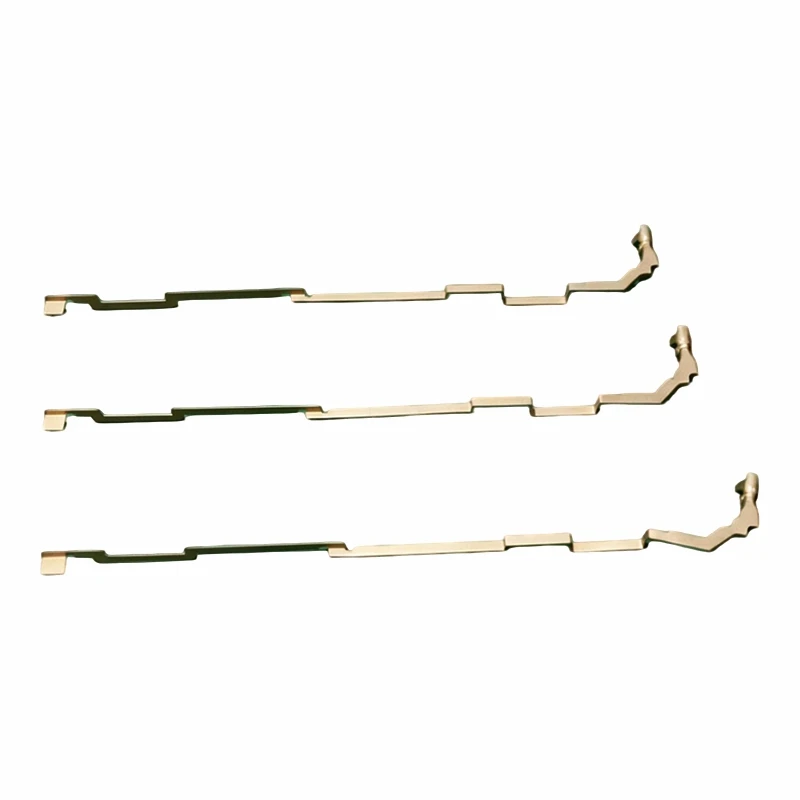

Over the years, as the printing industry has evolved-from desktop inkjets to high-volume industrial printers to 3D printers-our printer stamped parts have evolved too. We've had to adapt to thinner, more precise parts for compact printers, and more durable parts for heavy-duty industrial models. Each adaptation comes back to the same question: how will this part affect the final print quality? For example, when we started making parts for 3D printers, we realized that the alignment pins for the build plate needed to be even more precise than those for inkjet printers-even a 0.03mm shift would cause the 3D print layer to be misaligned. That's why we've invested so much in our stamping technology, because as printing gets more advanced, the parts that make it possible have to get more precise.
If you're a printer OEM, a print shop owner, or someone who sources parts for printing equipment, the quality of your printer stamped parts is directly tied to the quality of your output. Cutting corners on stamping precision, material quality, or surface finish might save you a few cents upfront, but it will lead to consistent print defects, downtime, and frustrated customers. That's why working with a supplier that understands the unique needs of printing components is so important. We specialize in creating stamped parts that are tailored to printing applications, from the smallest terminal contacts to the largest sensor brackets. If you're looking for a reliable supplier of high-quality Printer Stamped Parts, or want to learn more about our range of precision metal components for electronics, including Precision Terminal Stamping Parts, Electronic Stamped Parts, Shielding Metal Parts, or Small Precision Stamped Components, we'd be happy to discuss your specific needs. Contact us to discuss your printer stamped parts requirements and find the right solution for your printing quality goals.
References:
- Smith, J. (2022). The Role of Metal Stamped Components in Consumer Electronics. Journal of Precision Manufacturing, 18(3), 45-62.
- Miller, L. (2021). Tolerance Standards for Printing Industry Components. Printing Technology Quarterly, 12(4), 112-128.
- Chen, W. et al. (2023). EMI Shielding in Portable Printing Devices. International Journal of Electronics Manufacturing, 9(2), 78-91.
- Thompson, R. (2020). Material Selection for Durable Stamped Parts in High-Volume Printers. Industrial Components Report, 22(1), 34-47.