

If you're a stamped component supplier like me, you know complex-shaped parts aren't just tricky-they're the bread and butter that makes clients keep coming back. I've been in this game for 12 years, and let me tell you, optimizing the stamping process for weird, one-of-a-kind shapes isn't about fancy equipment alone-it's about nailing every tiny detail, from initial design checks to post-stamp tweaks. Over the years, I've fixed more botched jobs (think warped aerospace brackets and mismatched automotive connectors) by ditching the "set it and forget it" mindset and leaning into data, iteration, and smart partnerships. Today, I'm walking through the actual, actionable steps I use to cut costs, reduce scrap, and get complex stampings part right the first time.
First off, let's talk about pre-production-this is where most suppliers (including I was guilty of this early on) cut corners and end up paying for it later. When a client sends over a CAD file for a part that's got twists, undercuts, or tight radii, the first thing I do isn't fire up the press. It's a deep dive into material and design validation, because if you pick the wrong stuff or misjudge a shape's flow, you're already sunk. Let's break that down: material selection is non-negotiable for complex shapes. For example, if we're stamping a part with a sharp angle that needs to hold tensile strength, I don't just grab the cheapest steel off the shelf. I'll test formability curves for each material-like deep-draw aluminum vs. mild steel-because complex shapes need material that can stretch without tearing or wrinkling. I also work closely with clients to tweak designs where possible; sometimes a tiny tweak to a radius or a minor undercut can eliminate two secondary operations (like trimming or re-straightening) entirely, which saves us both time and money. And hey, if you're hunting for custom options, make sure you're checking out reliable sources for materials and related parts-we reference Stamping Part for common part specs, Stamping Component when we're pulling component specs for multi-part assemblies, and Stampings Part for batch-specific quality benchmarks.
Next up, tooling design and fabrication-this is the backbone of any optimized stamping process, especially for complex shapes. I've seen so many teams rush tooling and end up with parts that tear or have inconsistent wall thickness, and it's almost always because they skipped the prototyping step. For complex shapes, I swear by soft tooling first-these are low-cost, short-run tools made from materials like aluminum or P20 steel that let us test the part without investing in hard tooling right away. When we prototype, we run a small batch (usually 50–100 pieces) and check every metric: how the metal flows around undercuts, if the radii are crisp, if there's any springback (that annoying thing where a bent part snaps back to its original shape a little), and if secondary operations like deburring are even needed. Once we nail the prototype, we move to hard tooling, which is built from high-grade tool steel for durability. I also design tooling with features like adjustable die holders or segmented punches-these make it way easier to tweak the tool if we hit a snag mid-run, instead of scrapping the whole thing. For parts that need precision hardware, like threaded inserts or connectors, we use Hardware Stamping best practices to integrate those features directly into the stamping process, so we don't have to add an extra step later. That's a big win for both speed and accuracy.
Now, running the press-this is where the rubber meets the road, and even the best tooling will fail if you're not controlling the process variables. When we're stamping complex shapes, I don't just set the press speed and go. Variables like blank size, punch velocity, lubrication, and blank holder force all play a huge role in how the metal flows. Blank holder force is probably the most important one here-too little, and the part wrinkles; too much, and it tears. For complex shapes, I use a real-time monitoring system that tracks force on each die section individually. Because a shape with multiple curves might need different forces in different spots-like higher force on a tight radius to prevent wrinkling, lower force on a flat section to avoid tearing. Lubrication is another thing people sleep on. For high-formability materials, we use a dry film lubricant (instead of a liquid one) because it's more consistent and leaves less residue, which means less post-stamp cleaning. I also adjust press speed based on the shape-slower for parts with deep draws, faster for parts with shallow, sharp angles. It takes a little trial and error at first, but once you get the variables dialed in, you'll see scrap rates drop from 15% to under 3% (I've done that-saved my company tens of thousands of dollars in a year).
Secondary operations are the final piece of the puzzle, and optimizing these is just as important as the stamping itself, especially for complex shapes. Most complex stamped parts need at least one secondary step: trimming excess material, deburring sharp edges, bending a feature that couldn't be done in the press, or heat treating to boost strength. The key here is to plan these steps in the pre-production phase, not after the stamping is done. For example, if we have a part with a very tight internal undercut, we design the stamping process so the undercut is accessible for trimming with a laser or a waterjet, instead of requiring manual deburring (which is slow and error-prone). We also use post-stamp inspection tools-like coordinate measuring machines (CMMs) that scan the entire part, not just a few points-to catch any dimensional issues before the part goes to the client. I've also started offering in-house secondary operations for common steps, like powder coating or assembly, because it lets us control the quality end-to-end and deliver a finished Pressed Component that meets the client's exact specs, no extra coordination needed.
Wait, let's be real-even with all this, there will still be challenges. Last year, we had a client send a bracket for a medical device that had a 0.2mm radius and a deep draw, and no matter what we did, the metal tore at the draw section. We went back to the design phase, tweaked the radius to 0.25mm (only 0.05mm, but it made all the difference), switched to a slightly more formable grade of stainless steel, and adjusted the blank holder force on the press. We got the first good part on the fifth run, and the client was stoked because they avoided a delay to their production line. The takeaway here is that optimization isn't a one-and-done thing-it's a cycle of feedback, testing, and tweaking, long after the first batch is sent.
If you're a client looking for a reliable stamped component supplier, don't just go for the cheapest quote. Ask about their pre-production prototyping process, their tooling design, and how they handle complex shapes. We invest in the stuff that lets us nail those tricky parts-like CAD simulation software that predicts metal flow before we even cut tooling, and in-house metallurgists who can test materials on the spot. For us, that means we can work on everything from aerospace brackets to automotive sensors, and we don't have to turn down complex jobs because they're "too hard."
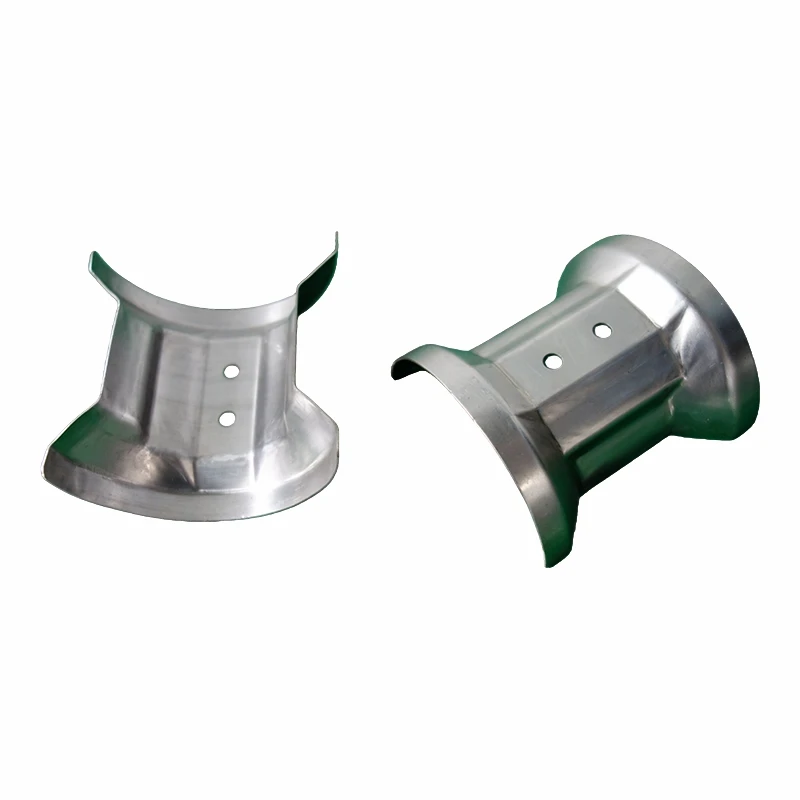
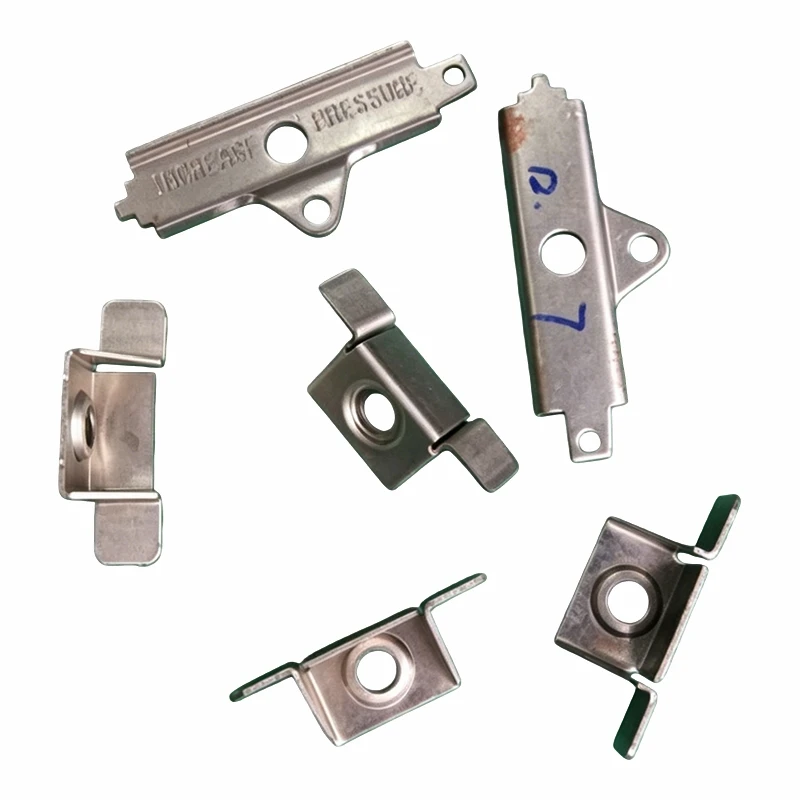
I've been in this business long enough to know that the suppliers who stand out aren't the ones who can do simple parts fast-they're the ones who can turn a messy, complex shape into a high-quality part, on time and on budget. If you're looking for a stamped component supplier that knows how to optimize the stamping process for complex shapes, let's connect. We'd love to discuss your project, whether it's a one-off prototype or a large production run.
References:
- Database for Forming Processes and Materials, Society of Manufacturing Engineers (SME), 2022.
- Metal Stamping Tooling Design Standards, American Iron and Steel Institute (AISI), 2021.
- Real-Time Process Monitoring in Stamping Operations, International Journal of Machine Tools and Manufacture, Vol. 165, 2020.
- Secondary Operation Optimization for Complex Stamped Components, Journal of Manufacturing Processes, Vol. 58, 2020.