

When I walk through the factory floor at our metal stamping plant, I always find myself pausing by the press lines where raw metal coils transform into the parts that hold together everything from refrigerators to smartphones. For our team-we've been making custom stamped parts for over 12 years, so I've seen almost every material that works in this process-the choice of metal is the difference between a part that lasts 5 years and one that lasts 20. Customers often ask me, "What's the right metal for my stamping project?" Today, I want to break down the most common materials we use, why they're popular, and how we match them to specific applications, whether you need appliance brackets or electronic connectors.
Let's start with the most ubiquitous material in metal stamping: carbon steel. It's the workhorse of our shop, and for good reason. Carbon steel is affordable, easy to stamp, and has excellent structural strength. It's made from iron with a small amount of carbon mixed in, and the amount of carbon (typically between 0.05% and 2%) changes its properties. Low-carbon steel, for example, is soft and ductile-perfect for deep drawing, which is when we pull flat metal into complex shapes like oven walls or appliance pans. We regularly use low-carbon steel for appliance metal panels and oven stamped parts because it forms smoothly without cracking, and it's cheap enough for mass production. But carbon steel rusts if it's not protected, right? That's why we often plate it with zinc to make galvanized steel, or add a layer of paint for extra corrosion resistance. I recently worked on a project for a major appliance brand where we used galvanized carbon steel to make appliance metal brackets that hold refrigerator shelves-they needed to be strong enough to support heavy glass and not rust in the humid fridge environment. If your project needs a strong, low-cost part that doesn't need extreme corrosion resistance, carbon steel is almost always our first recommendation.
Next up, stainless steel. This is the go-to when corrosion resistance is non-negotiable. Stainless steel is iron with at least 10.5% chromium, which forms a thin, invisible layer on the surface that stops rust from spreading. There are different grades, and each works better for specific stamping tasks. 304 stainless is the most common-it's ductile, easy to stamp, and resistant to food acids and moisture, so it's perfect for kitchen appliances like ovens, dishwashers, and refrigerators. We use 304 stainless steel for a lot of our appliance metal panels because they don't have to be polished, just durable against spills and daily use. Then there's 316 stainless, which has extra molybdenum, making it resistant to salt water and harsh chemicals. We used 316 stainless for a medical device client a few months ago-their parts needed to be sterilized with strong chemicals, and 316 held up way better than 304. The downside? Stainless steel is more expensive than carbon steel, and it's a bit harder to stamp-it requires more force from our presses, and the tools wear out faster. But when you need something that won't corrode, stainless is the only way to go. I always tell customers, "If your part is going near water, food, or chemicals, skip the carbon steel-stainless is worth the extra cost."
Aluminum is another staple in our stamping shop, and it's grown in popularity over the last decade as companies want lighter parts. Aluminum is lightweight (about a third the weight of steel), highly conductive, and corrosion-resistant on its own (thanks to that same self-healing oxide layer as stainless steel). It's also super ductile, which makes it great for complex shapes. We use aluminum a lot for electronic stamped parts like connectors because it's a good electrical conductor, and it's thin enough to stamp into tiny, precise shapes without breaking. For example, we made small aluminum contact pins for a smartphone manufacturer last year-they needed to be thin, conductive, and fit into a space just a few millimeters wide. Aluminum is also great for automotive parts, where weight reduction improves fuel efficiency. The only downside of aluminum? It's softer than steel, so it's not ideal for parts that need to hold very heavy loads. But if weight is a priority, aluminum is the perfect choice. I remember a customer who switched from steel to aluminum for their appliance metal brackets and cut the weight of the brackets by 40%-that translated to lower shipping costs for their entire product line.
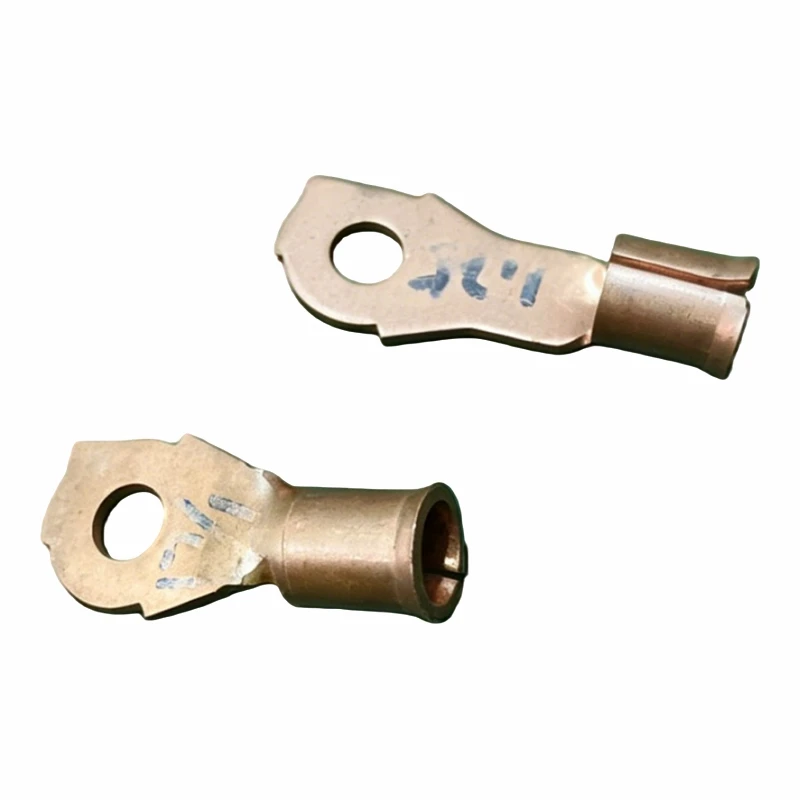
Copper and copper alloys are less common, but they're essential for specific applications where conductivity matters. Copper is one of the best electrical conductors of any common metal, and alloys like brass (copper + zinc) and bronze (copper + tin) add strength and make stamping easier. We use copper and brass almost exclusively for connector stamped parts because these parts need to carry electrical current without resistance. For example, a USB connector or a circuit board pin is made from brass-its strength means it won't bend when you plug in a cable, and its conductivity ensures the signal passes through cleanly. Brass is also more affordable than pure copper, so it's the go-to for most connector applications. We've worked with a few clients who needed pure copper for high-frequency electronic parts, but that's rare because it's softer and more expensive. If your project involves electricity, copper or brass is almost always the right material.
Now, let's talk about specialty metals, which we use for more demanding applications. Nickel alloys like Inconel are used in extreme environments-like parts for gas turbines or aerospace equipment where temperatures are very high. These alloys can withstand heat up to 1,000 degrees Fahrenheit without losing strength, but they're super hard to stamp-they require special tools and slower press speeds. We also use pre-plated metals, like tin-plated steel, which saves our customers a step because the plating is already done before stamping. That's perfect for small parts like hardware stamping, where plating after stamping could warp the part. Specialty metals are more expensive, so we only recommend them when the application can't be met with carbon steel, stainless, aluminum, or copper.
A question I get all the time: how do you choose the right material for a stamping part? It's not just about cost-you have to think about the environment the part will be in, the loads it will carry, the conductivity needed, and even the appearance. For example, if you're making appliance metal panels that will be visible on a stove, you want a metal that looks good-stainless steel can be polished, aluminum can be anodized to different colors, and carbon steel can be painted. If you're making a bracket that holds a washing machine drum, you need a strong metal like carbon steel or stainless steel that can handle vibration and weight. If you're making a connector for a laptop, you need a conductive metal like brass or aluminum that's small enough to fit in the tight space.
Let me give you a real example from our shop to make this concrete. Last quarter, we worked with a large home appliance manufacturer who needed three different parts for their new oven: oven stamped parts, appliance metal brackets, and appliance metal panels. For the oven walls (oven stamped parts), we used low-carbon steel because it's easy to form into the curved shape needed, and we plated it with zinc to prevent rust from oven moisture. For the brackets that hold the oven door, we used 304 stainless steel because it's durable enough to handle the door's weight and heat from the oven, and it won't rust if food spills on it. For the outer appliance metal panels, we used pre-painted carbon steel because it's affordable, looks smooth, and doesn't require extra finishing. They came back to us later for connector stamped parts for their smart oven's control panel-we used brass there because it needs to conduct electrical signals to the touchscreen. This project shows how different materials work together in one product, depending on what each part needs.
Another example: we had a client who makes computer hardware and needed hardware stamping parts for their new server racks. They needed parts that were lightweight but strong, so we used aluminum alloy 6061 for most of the brackets because it's lightweight and has good strength. For the parts that connect to power cables, we used copper alloy C11000 because of its excellent conductivity. They were happy because the parts were lighter than steel, which helped reduce shipping costs for their server racks, and the connectors worked perfectly for their power needs.
It's important to note that metal stamping isn't just about picking a material-our team has years of experience adjusting the stamping process to work with each material. For example, stainless steel work hardens as we stamp it, meaning it gets harder and harder with each bend, which can cause cracking if we don't use the right lubricants and press speeds. We have to adjust the force on our presses when stamping aluminum too, because it's softer and can stretch more easily. Carbon steel is straightforward, but we have to make sure the right type (low-carbon vs. high-carbon) is used based on the shape we're making.
If you're new to metal stamping, it can feel overwhelming to choose the right material. That's why we always encourage customers to talk to our engineering team early in the process, not just when they're ready to order. We can look at your part's design, the application, budget, and timeline to recommend the best material and process. For example, if you're not sure whether to use aluminum or stainless steel, we can run a small test stamp to see how each material works for your specific shape.

At the end of the day, our goal as a metal stamping supplier is to make parts that meet our customers' needs, and the material is the foundation of that. We work with all of these materials-carbon steel, stainless steel, aluminum, copper alloys, and specialty metals-and we have the experience to know which one will work best for your project. Whether you need appliance metal brackets for a refrigerator, connector stamped parts for a smartphone, hardware stamping for a cabinet, oven stamped parts for a new range, or appliance metal panels for a dishwasher, we can help.
If you're working on a project and need custom stamped parts, we'd love to hear from you. Our team can walk you through every step, from choosing the right material to the final production, and make sure your parts are made to your exact specifications. Don't hesitate to reach out to start a conversation about your metal stamping needs.
References
- Dieter, G. E. (1986). Mechanical Metallurgy (3rd ed.). McGraw-Hill Education.
- ASM International. (2004). Metal Stamping and Forming. ASM Handbook, Volume 14B: Metalworking: Sheet Forming.
- Kaczmarek, J. (2011). Aluminum Alloys: Properties and Applications. IntechOpen.
- Stainless Steel World. (2018). Selection Guide for Stainless Steels for Corrosion Resistance. KCI Publishing B.V.
- Electronic Design. (2020). Connector Materials: Choosing the Right Metal for Performance. Access Intelligence, LLC.