

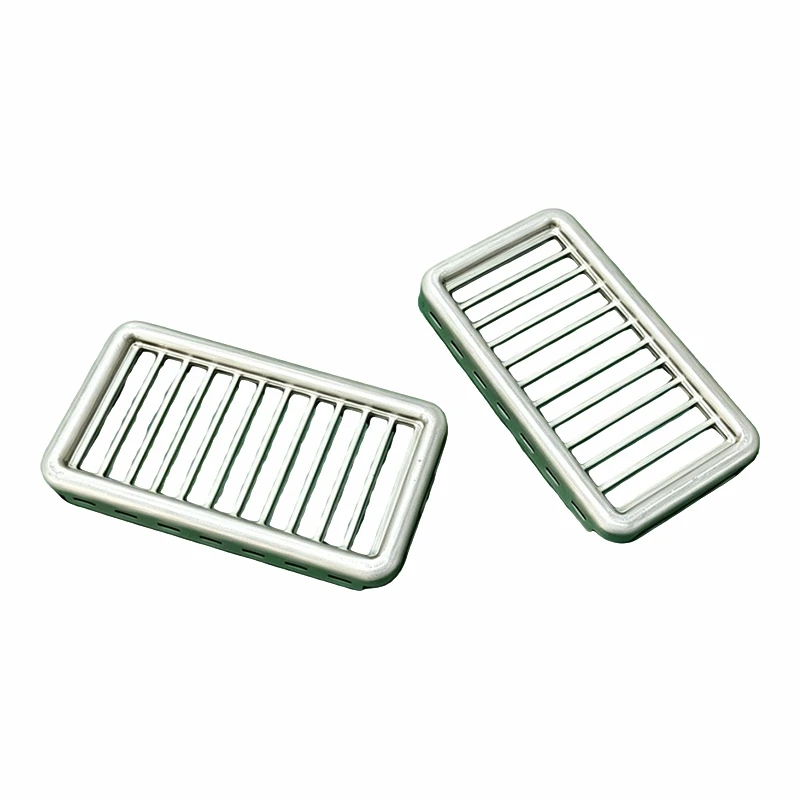
If you've ever needed a replacement part for a laser printer, inkjet, or all-in-one device, you've probably run into printer stamped parts without even realizing it. These small, metal components-think the tiny metal brackets that hold toner cartridges in place, the terminals that connect a printer's circuit board to its paper feed system, or the stamped guides that align paper as it moves through the machine-are the unsung workhorses of office printing. As a supplier that's specialized in manufacturing and delivering these parts for over a decade, I get asked one question more than any other: What's the cost range for printer stamped parts?
The truth is, there's no one-size-fits-all answer. Printer stamped parts aren't generic; their cost depends on a mix of factors that balance design complexity, material choice, production volume, and finish requirements. Let me break down what goes into pricing these tiny metal parts, walk you through real-world cost ranges I see every day, and explain why paying attention to these details matters if you're a printer manufacturer, repair shop, or parts reseller.
First, let's set a quick context: printer stamped parts fall under the broader category of electronic stamped components, which includes everything from connectors to precision terminals. If you're looking for parts that work with other office automation gear or smaller, ultra-precise components, it's worth browsing our related lines, like Connector Stamped Parts or Small Precision Stamped Components, but for now, let's focus specifically on parts made for printers.
The Key Factors That Shape Printer Stamped Parts Cost
Before diving into ranges, let's talk about what actually drives the price of these parts. Every part I ship has a unique set of requirements, and each one shifts the cost needle.
-
Design Complexity & Precision Tolerance
Printers demand tight tolerances because even a 0.1mm misalignment can cause paper jams, poor print quality, or failed electrical connections. For example, a simple stamped metal bracket that holds a toner cartridge might only need ±0.2mm accuracy, but a precision terminal that connects the printer's fuser unit to its power supply could require ±0.05mm accuracy. The more complex the part's shape-like curved edges, cutouts, or multiple bends in tight spaces-the more steps it takes in the stamping process, and the higher the tooling costs. Tooling, by the way, is a big upfront expense: a simple stamping die for a basic printer part might cost $500 to $2,000, while a complex die for a precision component can run $5,000 to $20,000 or more. That tooling cost is spread across all the parts produced, so it's a critical factor, especially for low-volume orders. -
Material Choice
Printer stamped parts use a range of metals, and material cost makes up 20% to 50% of a part's total price. The most common materials are:- Low-carbon steel: The cheapest option, perfect for non-electrical parts like paper guides or mounting brackets. It costs $1.50 to $3 per kg.
- Stainless steel: More durable and corrosion-resistant, used for parts exposed to heat (like fuser brackets) or rough handling. It runs $3 to $6 per kg.
- Copper or brass: For electrical terminals or connectors, since they conduct electricity well. Copper is $7 to $10 per kg, brass is $8 to $12 per kg.
- Aluminum: Lightweight, good for large printer frames or heat sinks, priced at $2 to $4 per kg.
The finish also adds cost: plating (like tin, zinc, or nickel) for corrosion resistance or conductivity, powder coating, or passivation. A tin-plated electrical terminal might cost $0.01 to $0.02 more per unit than an unplated one.
-
Production Volume
This is the biggest driver of per-unit cost. Stamping is a high-volume process, so the more parts you order, the lower the per-unit price. I see ranges from prototype runs to bulk production every month: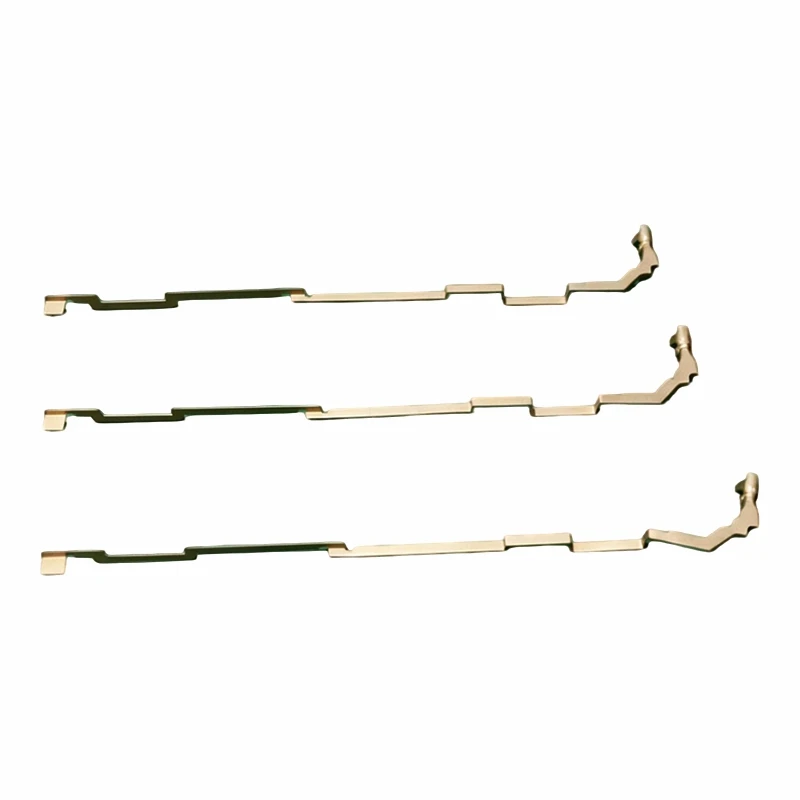
- Low-volume (100 to 1,000 units): Prototype or small-batch orders for custom printer parts. The tooling is spread over fewer units, so per-unit costs here are the highest.
- Mid-volume (1,000 to 10,000 units): Common for repair shops or small printer brands replacing obsolete parts.
- High-volume (10,000+ units): For large printer manufacturers mass-producing new models.
-
Finish & Additional Requirements
If a part needs special testing (like electrical conductivity checks for terminals, or salt spray testing for parts used in humid environments), that adds a small surcharge. Packaging might also matter: bulk orders come in standard cardboard boxes, while small prototype orders might need custom packaging to avoid damage during shipping.
Real-World Cost Ranges for Printer Stamped Parts
Now that you know what shapes the price, let's get into the actual numbers I work with as a supplier. These ranges are based on parts I've delivered to printer OEMs, repair networks, and parts distributors over the last five years, so they're grounded in real market conditions.
-
Basic Printer Stamped Parts (Non-Electrical, Low Complexity)
These are the simplest parts: paper guides, mounting brackets, or small metal clips that hold toner or ink cartridges in place. They use low-carbon steel or thin stainless steel, have loose tolerances (±0.2mm or more), no plating needed, and are made with basic stamping dies.- Low-volume (100–1,000 units): $0.15 to $0.50 per unit. Prototype runs might hit $0.75 per unit if the tooling is new for a custom part.
- Mid-volume (1,000–10,000 units): $0.08 to $0.20 per unit.
- High-volume (10,000+ units): $0.03 to $0.08 per unit.
For context, a pack of 50 small paper guide clips for office laser printers would cost between $4 and $10 at retail, but the bulk per-unit price from a supplier is well under $0.10 each.
-
Mid-Complexity Printer Stamped Parts (Semi-Electrical, Medium Tolerance)
These parts bridge mechanical and electrical functions: small terminals that connect the paper feed sensor to the circuit board, brackets for the print head assembly, or connectors for the printer's USB port. They often use plated steel or brass, have tolerances of ±0.1mm, and require a simple finish (like zinc plating for corrosion resistance).- Low-volume (100–1,000 units): $0.50 to $2.00 per unit. Custom terminals for a specialty small printer could hit $2.50 per unit here.
- Mid-volume (1,000–10,000 units): $0.20 to $0.75 per unit.
- High-volume (10,000+ units): $0.08 to $0.30 per unit.
A good example is the small brass terminal used in many inkjet printers to transfer power to the heating element: high-volume orders for these run around $0.15 to $0.25 per unit.
-
High-Precision Printer Stamped Parts (Electrical, Tight Tolerance)
These are the most critical parts that often go unnoticed, but a defect here can disable a whole printer. Precision terminals for the fuser unit, connectors for the network interface, or small stamped sensors that detect paper jams. They use copper, brass, or stainless steel, have tolerances of ±0.05mm or less, require tin or gold plating for conductivity, and often go through post-stamping processes like bending or laser cutting.- Low-volume (100–1,000 units): $2.00 to $10.00 per unit. Custom precision terminals for industrial printers can go even higher, up to $15 per unit, for small prototype runs.
- Mid-volume (1,000–10,000 units): $0.75 to $3.00 per unit.
- High-volume (10,000+ units): $0.30 to $1.00 per unit.
Gold-plated precision terminals for high-end office printers, for example, run around $0.50 to $0.80 per unit in bulk, because the gold plating is only a thin layer, but the tolerance is so tight that each part has to be inspected manually.
Wait, I should note that if you're looking for parts that overlap with these precision needs, you might want to check our Precision Terminal Stamping Parts line, which has specific components made for electronic devices like printers. Also, many of these printer parts are part of our broader Electronic Stamped Parts catalog, so if you need matching connectors or terminals for a full printer assembly, that's a good starting point.
Common Misconceptions About Printer Stamped Parts Cost
Over the years, I've heard a lot of myths from potential customers, so let's clear a few up:
- Myth: All small parts are cheap. Not true-precision components with tight tolerances and special materials can be more expensive than small plastic parts. I've seen a tiny precision terminal for a multifunction laser printer cost more than the plastic case of the whole device, in small volumes.
- Myth: High volume always means the lowest cost. While per-unit cost drops, if you order 100,000 parts of an obsolete design that requires custom tooling, the upfront tooling cost alone might make the total order more expensive than a lower volume of a newer, simpler part.
- Myth: Generic parts are always cheaper. Off-brand, non-OEM printer stamped parts are often made with lower-quality materials and looser tolerances, so while the upfront per-unit price is slightly lower, they fail more often, leading to higher long-term costs for repairs or returns.
How to Get the Best Value for Your Printer Stamped Parts
Whether you're a printer manufacturer, a repair shop, or a parts reseller, here's what I recommend to keep costs reasonable without sacrificing quality:
- Order in bulk where possible. If you're restocking parts for repair, ordering 5,000 units instead of 500 cuts the per-unit cost in half, usually.
- Be clear about your tolerance and finish needs. If a part only needs ±0.2mm accuracy, don't ask for ±0.05mm-it'll add unnecessary cost.
- Work with a supplier that offers custom prototyping. I always suggest getting a prototype before placing a large order to make sure the part fits and functions correctly, which saves you from costly mistakes down the line.
- Consider part consolidation. If you're assembling a printer, look for parts that combine two functions into one stamped component. For example, a bracket that also acts as a terminal can reduce the number of parts you need to source and assemble, cutting total costs.
Ready to Source Your Printer Stamped Parts?
If you're working on a new printer design, restocking parts for repairs, or need a custom component for an industrial printing device, I'd be happy to walk you through our options. We supply printer stamped parts to small and large businesses across the globe, with quality testing and fast lead times. Whether you need basic paper guides, precision terminals, or related components like Office Automation Stamped Parts for other office gear, we can help you find the right part at a competitive price.
Don't hesitate to reach out to discuss your specific needs. We'll provide a free, no-obligation quote tailored to your volume and requirements.
References
- Metal Stamping Association. (2022). Cost Factors for Precision Stamped Metal Parts. Retrieved from industry trade publications on metal stamping pricing and manufacturing standards.
- International Electronics Manufacturing Initiative (iNEMI). (2021). Material and Process Cost Benchmarks for Electronic Stamped Components.
- Office Technology Repair Network. (2023). Cost Analysis of Replacement Parts for Laser and Inkjet Printers, based on survey data from 500+ repair technicians across North America and Europe.
- Metal Prices Index. (2024). Quarterly Report on Raw Material Costs for Steel, Copper, Brass, and Stainless Steel, as used in electronic component manufacturing.