

Hey there, if you've ever wondered what goes into making those big, heavy metal stamped parts that hold everything together in cars, machinery, or even construction gear, let me tell you-it's not just cranking up a machine and hitting go. As a metal stamping supplier who's been in this game for over a decade, I've navigated every headache that comes with large-sized stampings, and trust me, the difficulty level jumps way higher than small parts. Let's break this down like we're chatting over coffee, no stuffy jargon allowed.
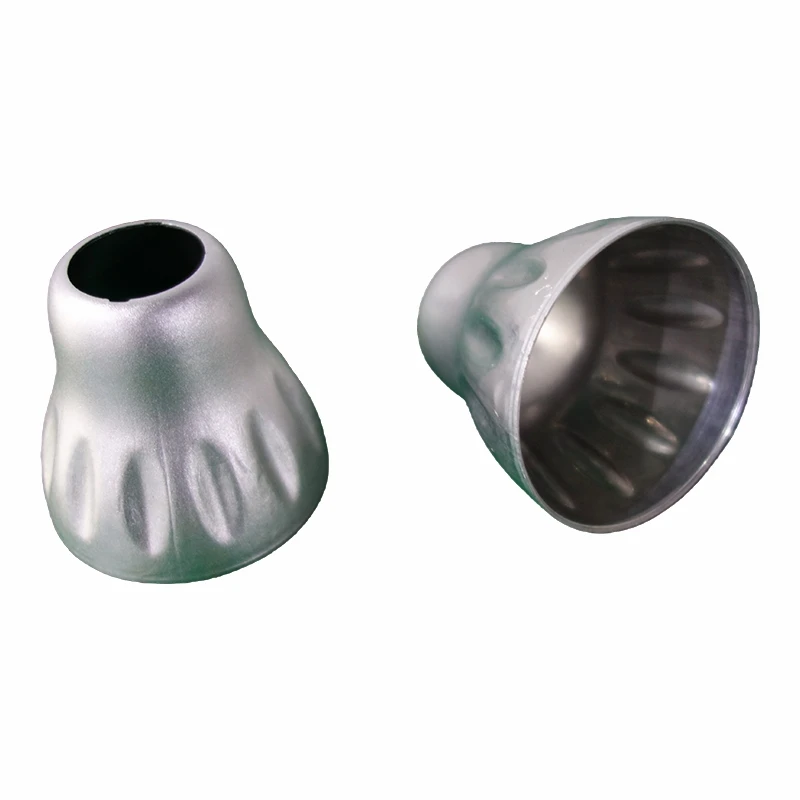
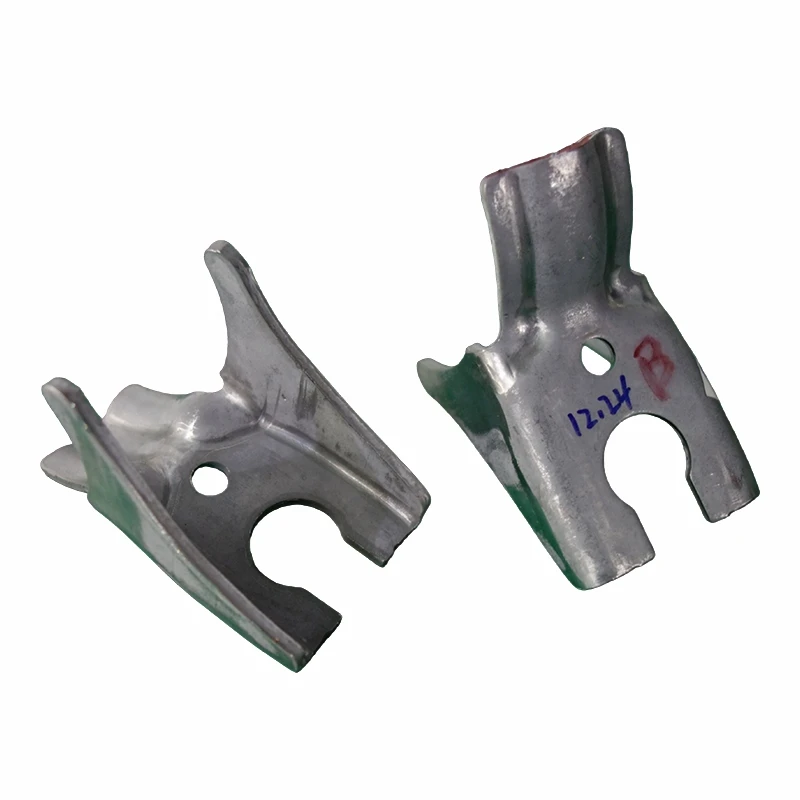
First off, let's get clear on what we're talking about here. A large-sized stamped part isn't your tiny phone clip or a small bracket that fits in a drawer. We're talking parts that measure 3 feet or more-think truck chassis rails, heavy equipment hinge plates, or industrial gear housings. When I first started out, I thought "bigger" just meant more raw material. Spoiler: I was so wrong. The first big hurdle is sheer material handling, and it's not just lifting heavy sheets (though that's part of it). Most large parts start as thick sheet metal, right? Whether you need a custom Stampings Part for a truck frame or a Stamping Product for construction, those big sheets are unwieldy. They warp if you set them down wrong, stick to each other from oil residue, and get dented just from moving them from storage to the stamping press. I've had a 4-foot stainless steel sheet get a random crease from a forklift bump that cost us a whole day's work-no one's perfect, but it's a lesson you don't forget.
Then there's the press itself. Small parts run on fast, high-tonnage presses that crank out dozens per minute. Large parts? You need a press with way more tonnage, like 1,000 tons or higher, and the bed has to be big enough to fit the whole sheet. The problem here is alignment. If the press ram (the part that pushes the die down) is even a hair off, the whole sheet doesn't stamp evenly. Small presses have wiggle room, but a big sheet means a tiny alignment error leads to a part that's lopsided or has thin spots in critical areas. I once had a run of 20 hinge plates for heavy equipment that came out with uneven thickness because the press bed shifted a quarter of an inch mid-run-we had to scrap the whole batch, and that cost way more than just the metal. It's not like adjusting a small machine; fixing alignment on a big press takes hours, and you can't rush it.
Next up: die design and maintenance. The die is the shape that stamps the part, right? For small parts, dies are usually made of tool steel and last forever. But large dies? They're huge-some weigh thousands of pounds-and they have to bend, punch, or form metal over a big area. Those dies get worn way faster because the pressure is spread over a larger surface, but not evenly. A die for a large Sheet Metal Stamping Part that has multiple bends might have areas where metal pulls tight, causing cracks. Last year, we had a client need a custom die for a tractor fender that had 5 different curved sections. We spent 3 weeks tweaking the die, testing small runs, because if the metal pulled too hard on the tightest curve, the part would split. And if the die isn't perfect, every part you make is garbage. Plus, repairing a big die isn't just grinding a small spot-you have to weld heavy sections, machine them back to exact specs, and that's a team effort. No single person can fix a 6-foot die alone.
Don't even get me started on material consistency. For small parts, you can use a standard gauge sheet metal, but large parts need to be uniform across every sheet. If one sheet is slightly thicker or thinner, the stamping pressure has to change-and if you don't adjust the press in real time, the part can be too weak or too brittle. A client once sent us a batch of 5-foot steel sheets that had a 10% thickness variation across the sheet. We had to stop production, reject the whole batch, and wait for new material. That delayed their order by a week, and honestly? It's avoidable if the supplier of the Sheet Metal Part holds up their end. But when you're dealing with big metal, even tiny differences add up fast.
Quality control is another beast. For small parts, you can use a machine that snaps a photo and checks all edges in a second. Large parts? They're too big for that. We have to measure every bend angle, every hole position, and the overall shape by hand-with calipers, rulers, even laser trackers. A 4-foot pressed part can have a bend angle that's off by 2 degrees and it won't fit the client's machine. I once spent 2 hours measuring a batch of chassis rails because one came back from the press with a hole that was 1/8 inch off center. And that's not even the worst part-you have to check every part, because one bad one can cause the whole assembly to fail. Small parts have small mistakes, but a large part mistake is a huge liability for the client.
Wait, there's also something called "springback" that's way more common in large parts. Springback is when the metal springs back a little after you stamp it, so the bend isn't exactly the shape you wanted. For small parts, you overbend the die a tiny bit to compensate. For large parts, that compensation isn't linear-because the metal is thicker and has more mass, springback is harder to predict. We once had a client want a 3-foot angle bracket bent to 90 degrees. The first die made them 88.5 degrees, the second 89 degrees, and it took us 5 test dies to get it exactly 90. Each test die cost thousands of dollars, and each test run took 2 days. That's the kind of trial and error that makes large stamped parts so much harder than small ones.
Let's not forget about safety, either. Working with large presses and big sheets means safety can't be an afterthought. A loose sheet can shift in the press and injure someone, or a heavy die falling can crush a foot. We have to have safety gates that lock when the press is running, we use cranes to move big dies and sheets, and every worker on a large part run has to go through extra training. Small parts can be handled manually, but large parts need specialized equipment, and that adds to the hassle and cost.
As someone who does this day in and day out, I'll be honest-producing large-sized metal stamped parts is tough, but it's also super rewarding. When you get that perfect big hinge plate or chassis rail that fits exactly, it's way better than a tiny part. But here's the thing: if you're a company that needs these parts, you can't just pick any supplier. You need someone who knows the ins and outs of handling big metal, fixing alignment issues, tweaking dies, and catching small mistakes before they become big problems. If you're looking for reliable custom stampings, whether it's a Stampings Part, a Sheet Metal Stamping Part, a Stamping Product, a Pressed Part, or a specific Sheet Metal Part, we've got the expertise to get it right. Just reach out to talk through your project-we're here to help make sure your large parts come out perfect, no headaches.
References:
- Davies, G. (2011). Handbook of Metal Stamping Processes. Industrial Press Inc.
- Groover, M. P. (2020). Fundamentals of Modern Manufacturing: Materials, Processes, and Systems (7th ed.). Wiley.
- Johnson, R. F. (2018). Large-Format Metal Stamping: Challenges and Solutions. Journal of Manufacturing Processes, 32, 456-463.
- American Metal Stamping Association. (2022). Best Practices for Custom Large Stamped Part Production. Industry Guidelines Report.
- Wang, L., et al. (2021). Springback Compensation in Large Sheet Metal Stamping: Numerical and Experimental Analysis. International Journal of Machine Tools and Manufacture, 168, 103789.