

If you've ever ordered metal stampings for your business-whether you're in automotive, electronics, or appliance manufacturing-you know how much goes into getting a part that fits right, holds up, and comes on time. As a stamping product supplier who's worked with dozens of clients over the last 8 years, I can tell you it's not just about running a machine and cutting metal. Every step has little (and not-so-little) hurdles that can throw off a project, drive up costs, or even ruin a batch of parts. Today I want to break down the real, everyday challenges we face in stamping production, and maybe give you a peek into why your local stamping shop might need a little extra lead time for that custom order.
First off, let's talk about the materials themselves. Sheet metal is the backbone of almost all stamped parts, right? Whether you're making a simple bracket or a complex enclosure, the type of metal, its thickness, and even its batch consistency can make or break the run. One of the biggest headaches here is material springback. If you've never heard that term, it's basically when the metal tries to snap back to its original shape right after you stamp it. Like, imagine bending a paperclip with your fingers-let go, and it doesn't stay perfectly bent, it springs back a little. Multiply that by metal that's way thicker and stronger, and you've got a problem. For example, if you're stamping a 12-gauge steel bracket that needs a 90-degree bend, springback might make it come out at 87 or 92 degrees instead. Fixing that isn't as simple as adjusting the die a tiny bit either-different batches of the same metal can have slightly different tensile strength, so the springback amount changes. Last year we had a client in the HVAC industry who switched to a cheaper aluminum alloy for their duct brackets, and the springback was 3 degrees more than their previous metal. We had to rework three progressive metal stamping dies just to get the bend angle right, which pushed their delivery back two weeks and added 10% to their production costs. That's the kind of thing that doesn't show up on a spec sheet-it only pops up once you hit the stamping press.
Another material-related challenge is surface quality. A lot of clients don't realize that metal stampings don't just have to be structurally sound; they often need a smooth, burr-free surface for finishing or assembly. Burrs are those tiny, sharp metal edges that form when the punch cuts through the sheet metal. They're super common, but getting rid of them adds extra steps (like tumbling, grinding, or deburring) and time. Worse, some metals-like stainless steel or thin copper-are way more prone to burrs than mild steel. We had a client making electrical contacts that needed to fit into micro-connectors; even a tiny burr would cause a short circuit. We tried three different punch coatings and adjusted the stamping speed twice before we got the burr size down to a level that worked for them. If we'd missed that, their entire production line would have had to shut down because of defective parts. It's not just about stamping the part-it's about anticipating how the material will react and planning for those little imperfections.
Next up, tooling and die maintenance. Progressive metal stamping dies are the workhorses of high-volume stamping runs, right? They punch, bend, and form multiple parts in one stroke, so they need to be precise. But dies are made of hard metal, and they wear out over time-even with regular maintenance. The problem is, die wear isn't always gradual; sometimes you don't notice it until you get a batch of parts that are slightly off. For example, if the punch that creates a 0.5mm hole in a pressed component wears just 0.02mm, the hole becomes too big, and the part is scrap. Last quarter we were running a batch of 50,000 automotive door hinges, and about 2,000 parts had oversized pin holes because the die's guide pins had worn. We caught it during our in-process check, but it still cost us the cost of those parts and a day of downtime while we replaced the pins. What's worse, if you don't have a backup die ready (and good backup dies aren't cheap), you're stuck waiting weeks for a custom die to be made. That's why we keep spare parts for all our top dies, and we do daily checks of critical components-but even that can't stop wear from hitting when you least expect it.
Then there's the issue of dimensional accuracy. Stamped parts have to fit into other components, so even a 0.1mm deviation can make the whole assembly fail. But getting that accuracy relies on a bunch of factors: the press alignment, the sheet metal flatness, and even the ambient temperature in the shop. Wait, temperature? Yeah, really. Metal expands when it's warm, shrinks when it's cold. If your shop is set at 70 degrees, but it's 50 degrees outside when you unload a batch of sheet metal, the metal will shrink a little, and the stamped parts' dimensions will be off. We learned this the hard way two winters ago: one of our stamping lines was near a loading dock, and during a cold snap, the sheet metal coming into the line was 10 degrees colder than the shop. The first 5,000 parts had a 0.2mm difference in their bend length, and we had to scrap all of them. Now we have a temperature-controlled staging area for all incoming materials, and we let the metal acclimate to the shop temp for 24 hours before stamping. It adds a little time to the process, but it saves us from scrapping hundreds of parts-and our clients from dealing with assembly issues.
Supply chain delays are another huge challenge right now, and they're not something you can control, but they definitely impact stamping production. Almost all stampings parts rely on raw materials-steel, aluminum, copper-and lately, lead times for sheet metal have been all over the place. We had a client who needed a rush order of a metal stamped part for a product launch, and their usual steel supplier was backlogged for 6 weeks. We had to source a smaller batch from a different supplier, but that metal had a different surface finish, so we had to run a small test batch to make sure it would stamp correctly. It worked, but it added $1,500 to the client's cost and pushed the delivery by 5 days. The same goes for die parts-if a critical screw or guide pin breaks, you might have to wait for a specialized part to come in, especially if it's a custom size. Even the shipping of parts can be an issue; if you're sending delicate stamped parts that can get dinged or scratched, you need the right packaging, and if that's backordered too, you have to find a workaround that might not be perfect.
Quality control is another area where stamping production hits roadblocks. You can have a great die, perfect material, and a steady press, but if your QC process is lazy, you're going to get bad parts. But over-QC can slow down production a lot too. For low-volume custom parts, you can check every single stamped part, but for a high-volume run of 100,000 parts, that's not practical. We use a combination of automated vision checks (which scan parts for defects like burrs, holes, and shape) and random sampling, but even automated checks can miss tiny flaws. Last month, an automated scanner missed a set of tiny cracks in a batch of battery terminals, and we had to recall 3,000 parts before they got to the client. Now we run a manual check on 10% of every batch, regardless of what the automated check says. It takes extra time, but it's way better than sending bad parts out and dealing with returns or warranty issues.
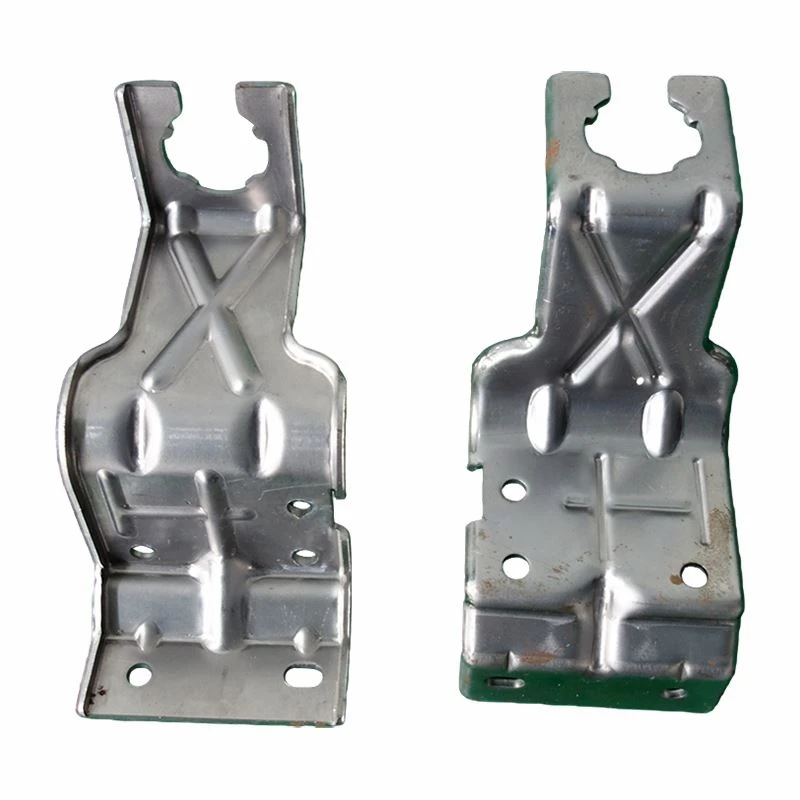
Wait, I should also mention part design changes. A lot of clients come to us with a design they've worked out, and then halfway through production, they decide to tweak something-maybe make a hole a little bigger, or change the bend angle. Sounds simple, right? But changing a Stampings Part might mean reworking the die, adjusting the stamping parameters, and testing to make sure the change doesn't affect the part's strength. We had a client in the medical device industry who changed the size of a mounting bracket hole mid-run. It was a tiny change, but the new hole size meant the die's punch had to be replaced, and we had to run a 1,000-part test batch to make sure the bracket still passed their strength tests. That added a week to the project, and the client had to pay for the new die and the extra testing. It's always better to get the design right before you start stamping, but that's not always possible, so we work with clients to minimize the impact of changes when they do come up.
Oh, and don't forget about operator error. Stamping presses are powerful machines, and even an experienced operator can make a mistake-maybe set the wrong stamping speed, load the sheet metal crooked, or forget to lubricate the die. One time, an operator forgot to apply lubricant to the die when running a batch of thin copper stampings. The metal stuck to the die, and when the press ran, it tore the die's punch, making 8,000 parts scrap and shutting down the line for a day while we replaced the punch. We now have a pre-stamp checklists operators have to go through for every run, but mistakes still happen. The key is having a team that's trained to catch issues early and fix them before they turn into big problems.
At the end of the day, all these challenges add up, and as a stamping product supplier, we're always looking for ways to make the process smoother for our clients. We invest in better dies, temperature control, and QC tools, and we work closely with clients early on to spot potential issues before production starts. If you're looking for custom metal stampings, or you have a project that needs a reliable partner, feel free to reach out to us to talk through your needs. We can help you find the right material, adjust your design if needed, and make sure your parts are delivered on time and meet all your specs.
References:

- "Metal Stamping: Principles and Practices" by John A. Schey, Society of Manufacturing Engineers, 2000.
- "Modern Sheet Metal Forming Technology" by Taylan Altan, Carl A. van Tyne, and Yongfeng Gao, CRC Press, 2018.
- "Stamping Die Design and Manufacturing" by K. Lingaiah, Industrial Press, 2008.
- "Quality Control in Metal Stamping Production" by Robert H. Todd, Dell K. Allen, and Alvin Alting, Manufacturing Processes for Engineering Materials, Pearson, 2012.