

If you've ever walked through a metal stamping shop - or sat across a table from a small-batch manufacturer trying to bring a new part to life - you know that the die is the unsung hero of the process. For anyone producing parts in low to medium volumes (think: automotive prototype brackets, aerospace component test runs, or custom consumer hardware), choosing the right die-making materials makes the difference between a tool that runs 1,000 flawless parts and one that wears out after 200, leaving you with wasted time, money, and material. As a metal stamping dies supplier who's worked with small-batch makers for over a decade, I've seen every mistake under the sun: engineers overspending on expensive tool steel for a part that only needs 500 units, or cutting corners on a cheap material that cracks mid-prototype run. Today, I want to break down the most common die-making materials for small-batch metal stamping dies, why they work (and when they don't), and how to match the right material to your specific part needs, whether you're using a Transfer Press Die, a Progressive Stamping Tool, or a simple Bending Die.
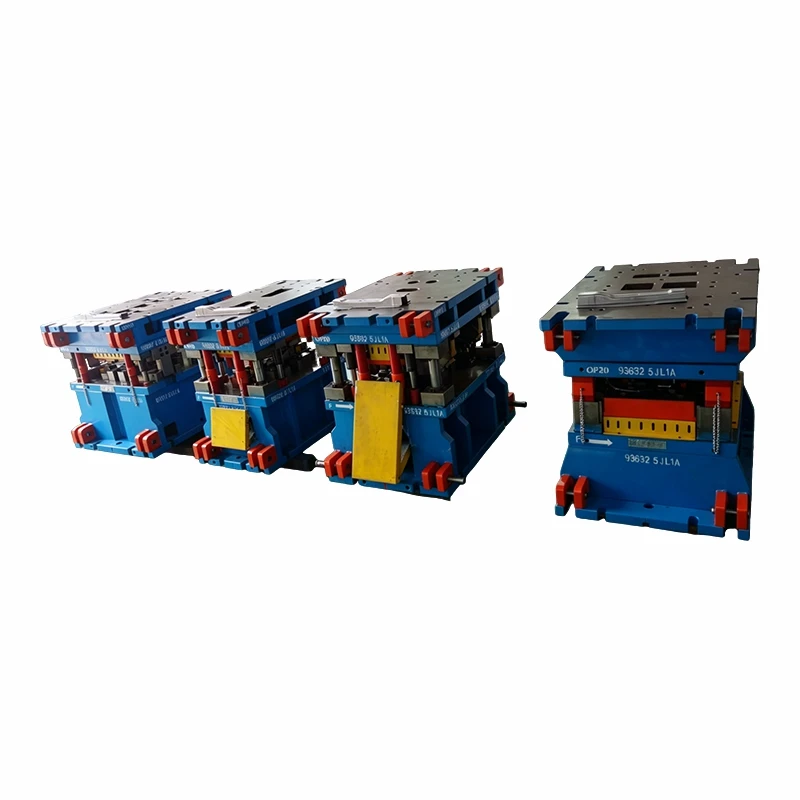

First, let's ground this in what small-batch metal stamping actually means. Unlike high-volume production runs that might churn out millions of parts per year, small-batch is typically 50 to 10,000 parts per run. That changes every decision: you don't need a die that will last 10 million hits, but you do need one that's quick to manufacture, easy to adjust if your design changes, and doesn't require a six-month lead time. The die's key components - the punch (the part that does the stamping), die block (the cavity the part is formed into), guide pins, and stripper (the part that strips the finished part off the punch) - all rely on different materials, but the punch and die block are the most critical for material selection. Let's start with the material that's been a workhorse for small-batch dies for decades: cold work tool steel, specifically A2 tool steel.
A2 is the unsung favorite for small-batch stamping dies, and for good reason. It's a air-hardening tool steel, which means it doesn't require the high-temperature quenching that can warp larger tooling - a huge win for dies that are often small and precision-made for low volumes. For runs between 1,000 and 10,000 parts, A2 strikes a near-perfect balance of hardness and affordability. It's hard enough to handle common stamping challenges: work hardening from stainless steel, galling (the adhesion of metal to tooling), and minor misalignment that can come with small-batch setups. I've seen A2 used for everything from the core of a Transfer Stamping Tool (great for multi-operation small runs where each station builds on the last) to a standalone Bending Die for aluminum brackets. The catch with A2? It's not ideal for runs over 10,000 parts - over time, its hardness will start to wear, leading to slightly off-tolerance parts. But for most small-batch projects, that's a non-issue. It also machines much easier than more exotic tool steels, so lead times are shorter - a huge plus when your project is on a tight timeline. I can't tell you how many times a prototype engineer has come to me panicking because their first die material cracked during testing, only for us to swap in A2, and they've had a flawless run ever since. That said, A2 isn't the only tool steel in play.
Next, oil-hardening tool steel, commonly known as O1 tool steel. If A2 is the workhorse, O1 is the reliable utility player, perfect for the smallest small-batch runs (50 to 1,000 parts). O1 hardens when quenched in oil, which gives it a very uniform hardness, and it's even easier to machine than A2 - so it's ideal for simple, low-complexity dies that don't need to stand up to heavy use. Think of a simple punch and die for stamping round holes in thin steel for a custom hardware part, or a standalone Bending Die for a single aluminum component. O1 is also much cheaper than A2, which makes it a no-brainer for one-off or very small runs where replacing the die after a few hundred hits isn't a big cost. The downside? It's less wear-resistant than A2, and prone to softening if exposed to high temperatures (like if you're stamping hot rolled steel instead of cold rolled). But for small-batch, low-temperature stamping of thin metals (0.5mm to 2mm), O1 is hard to beat. I recently worked with a small aerospace startup that needed 300 custom brackets for prototype testing - using O1 for their die cut their tooling cost by 30% compared to A2, and the parts came out perfectly, no issues. If you're building a simple die for a one-time run, O1 is a great starting point.
But wait, what if your small-batch run is a bit more complex, or you need a die that can handle occasional adjustments without being rebuilt? That's where shock-resistant tool steel, S7 tool steel, comes in. S7 is designed to withstand impact and shock, which makes it perfect for dies that have to handle sudden loads - like a Progressive Stamping Tool where parts are being fed through multiple stations, or a Transfer Press Die that moves parts between operations with quick, forceful presses. S7 is harder than O1 and has better toughness than A2, so it can handle the minor mishaps that come with small-batch production: a part that's slightly misaligned during feeding, a small bit of scrap getting stuck in the die, or a last-minute design tweak that requires adjusting the punch. For runs between 2,000 and 15,000 parts, S7 is a great middle ground - not as expensive as high-end D2 tool steel, but more durable than A2. I've seen S7 save projects when a prototype run hit a snag: a fabricator was stamping hardened steel for a medical device part, and their A2 die started chipping after 1,200 parts. Swapping to S7 extended the run to 8,000 parts, enough for the client's testing, without a huge increase in cost. The downside of S7 is that it's a bit more expensive than A2, so it's not the best choice for very simple, tiny runs, but for slightly more complex small-batch work, it's a top pick.
Now, let's talk about something that might surprise you: not all die components need to be made of tool steel. For small-batch dies, especially if you're working on a very tight budget, plain carbon steel (like 1018 or 1045) is a viable option for non-critical parts. Think of the die's base plate, or the guide rails that hold the punch and die block in alignment - parts that don't touch the metal being stamped directly, so they don't need the same hardness as the punch and die. Carbon steel is cheap, easy to machine, and perfect for small-batch dies where those non-critical parts are just there to hold the core tooling in place. I always tell clients: don't waste money making the base plate out of A2. The parts that touch the metal are what matter - that's where you spend the extra. That's why when we build custom Metal Press Tooling for small-batch runs, we only use tool steel for the active stamping surfaces, and carbon steel for the structural parts. It cuts down on cost without sacrificing performance, which is key for small-batch makers working on tight budgets.
Wait, is there a case where even tool steel is overkill for small-batch dies? Absolutely. For runs under 500 parts, especially when stamping very thin metal (under 0.5mm), some makers use brass or even plastic for die components. Brass is soft, easy to machine, and great for very small, delicate parts where tool steel might be too hard and cause scratches. I recently worked with a consumer electronics startup that needed 200 custom battery clips for a prototype - their A2 die would have been overkill, and the hardness would have left tiny burrs on the thin brass clip. Swapping to a brass die block gave them smooth, burr-free parts, and saved them almost 50% on tooling costs. The catch? Brass dies wear out after just a few hundred hits, so they're only for the very smallest runs. Plastic is even more niche, used for one-off prototype runs where the part is almost a proof of concept, not a functional component. I rarely recommend plastic for dies, but it's a good option if you need a die in a hurry and don't care about long-term durability.
Of course, material selection isn't just about the die block and punch. If you're using a Transfer Press Die or a Progressive Stamping Tool, you also have to consider other components, like the stripper plate or the pilot pins that align the part between operations. For these, we often use a mix of tool steel and even bronze - bronze is great for stripper plates because it's self-lubricating, so it doesn't scratch parts, and it's durable enough to handle multiple cycles. For guide pins, we use case-hardened carbon steel, which is cheap and has a hard surface that resists wear. That's why a good metal stamping die supplier (like ours) doesn't just pick one material for the entire die - we tailor each component to its job, balancing cost, durability, and lead time for your specific small-batch run.
Let's circle back to the common pitfalls I mentioned earlier. The biggest mistake I see small-batch makers make is overbuying tool steel for their dies. I had a client a few years ago who was making 5,000 automotive prototype brackets and insisted on using D2 tool steel - a high-end tool steel that's designed for runs over 100,000 parts. D2 is very hard and very wear-resistant, but it's also expensive, hard to machine, and has a long lead time. By the time we delivered the D2 die, the client had already adjusted their design, so the die wouldn't even work for the new bracket. We swapped to A2, which was half the cost and delivered in half the time, and they had a perfect run of 5,000 parts, exactly what they needed. That's why understanding your run size and part requirements is key: if you don't need a die that will last 1 million hits, don't pay for one.
Another pitfall is underbuying. I had a medical device client who was stamping 8,000 parts of hardened stainless steel, and they used O1 tool steel for their die. The O1 couldn't handle the work hardening of the stainless, and after 2,000 parts, the die started to chip, ruining a batch of parts and delaying their FDA testing. Swapping to S7 tool steel fixed the problem - S7's toughness stands up to work-hardening materials, and its hardness keeps wear low enough for a 8,000-part run. That's why it's important to consider not just run size, but the material you're stamping, how thick it is, and whether your part has complex features (like sharp bends or small holes) that add stress to the die.
At the end of the day, the best die material for your small-batch metal stamping project depends on three things: your run size, the type of metal you're stamping, and the complexity of your die. If you're running 50 to 1,000 parts of thin aluminum or soft steel, O1 tool steel is a great, affordable choice. For 1,000 to 10,000 parts of medium-thick steel or brass, A2 tool steel is reliable and cost-effective. For slightly more complex dies (like a Progressive Stamping Tool or Transfer Stamping Tool) running 2,000 to 15,000 parts, S7 tool steel gives the toughness you need to handle alignment issues and minor misfeeds. For very simple, non-critical parts, plain carbon steel works for structural components, and brass can be a cheap alternative for tiny, delicate runs.
If you're not sure which material is right for your project, or you're tired of dealing with dies that wear out too fast or cost too much, we're here to help. As a metal stamping dies supplier, we build custom dies tailored to small-batch needs, balancing quality, cost, and lead time. Whether you need a simple Bending Die for a one-off prototype or a complex Transfer Press Die for a multi-operation run, we can walk you through the material options to find the perfect fit for your project. Reach out to us today to discuss your metal stamping needs and get a custom quote.
References:
- Astakhov, V. P. (2006). Metallurgy of Stamping Dies. CRC Press.
- DeVries, K. L. (2011). Tool Materials for Metal Forming. Society of Manufacturing Engineers.
- Todd, R. H., Allen, D. K., & Alting, L. (1994). Manufacturing Processes Reference Guide. Industrial Press Inc.
- Smith, G. T. (2000). Die Design Handbook (3rd ed.). Society of Manufacturing Engineers.