

If you've ever worked with sheet metal stamping parts, you know their durability is non-negotiable-whether they're components in automotive chassis, agricultural machinery, or consumer electronics, failing parts can lead to costly repairs, safety risks, or production halts. As a sheet metal stamping supplier with decades of experience, I've seen firsthand how even minor design or manufacturing oversights can shrink a part's fatigue life: the number of load cycles a part can withstand before developing a crack or breaking. Fatigue failure rarely happens suddenly; it starts with tiny, invisible flaws that grow over time, so understanding the factors that influence this process is key to delivering high-quality, long-lasting stamped components. Let's break down the most critical factors that impact the fatigue life of sheet metal stamping parts, and how our team mitigates risks at every step.
First, material selection is the foundation of fatigue resistance, and it's not just about choosing a "strong" metal. Different sheet metals have distinct microstructures, hardness, and ductility that directly affect how they respond to repeated loading. For example, cold-rolled steel, a common choice for pressed parts, has a fine-grained microstructure that boosts tensile strength, but excessive cold working during stamping can make it brittle-prone to cracking when bent or cyclically loaded. On the flip side, aluminum alloys like 6061-T6 offer excellent corrosion resistance, but their lower yield strength means they deform more under cyclic stress, shortening fatigue life if not designed for the application. Our team works closely with clients to match material grades to their load requirements: for high-stress automotive parts, we might recommend high-strength low-alloy (HSLA) steel, which balances strength and ductility, while for lightweight electronics components, we opt for thin-gauge aluminum with controlled annealing to reduce residual stresses. It's a balance, too: a material that's too soft will deform permanently under load, while one that's too hard will crack at the first sign of stress-so we test material properties (like yield strength, elongation, and hardness) in-house before production to avoid missteps.
Next, geometric design is a often-overlooked factor that can either enhance or destroy fatigue life. Sharp corners, sudden thickness changes, and holes create stress concentrations-areas where cyclic load multiplies exponentially, acting as starting points for cracks. A small 90-degree bend in a stamped component, for example, can cause stress to be 3 to 5 times higher than in adjacent flat areas, even if the overall part strength is sufficient. Over the years, we've learned to advise clients on design tweaks that eliminate these hotspots: adding fillets to corners, transitioning thicknesses gradually instead of abruptly, and placing holes away from high-stress zones. For instance, when designing a mounting bracket for a farm tractor (which experiences constant vibration), we'll suggest a 1.5mm fillet instead of a sharp edge to reduce stress concentration by up to 40%, according to our in-house fatigue testing. Even minor details like hole size matter: a punched hole with a burr around its edge is far more likely to develop a fatigue crack than a smooth, deburred hole, so we prioritize secondary operations like deburring for high-cycling applications. It's not just big parts either-for stamped components used in smartphones, where vibrations are constant, we've optimized corner radii to be as large as possible without adding unnecessary weight, extending the part's fatigue life by 20% in real-world testing.

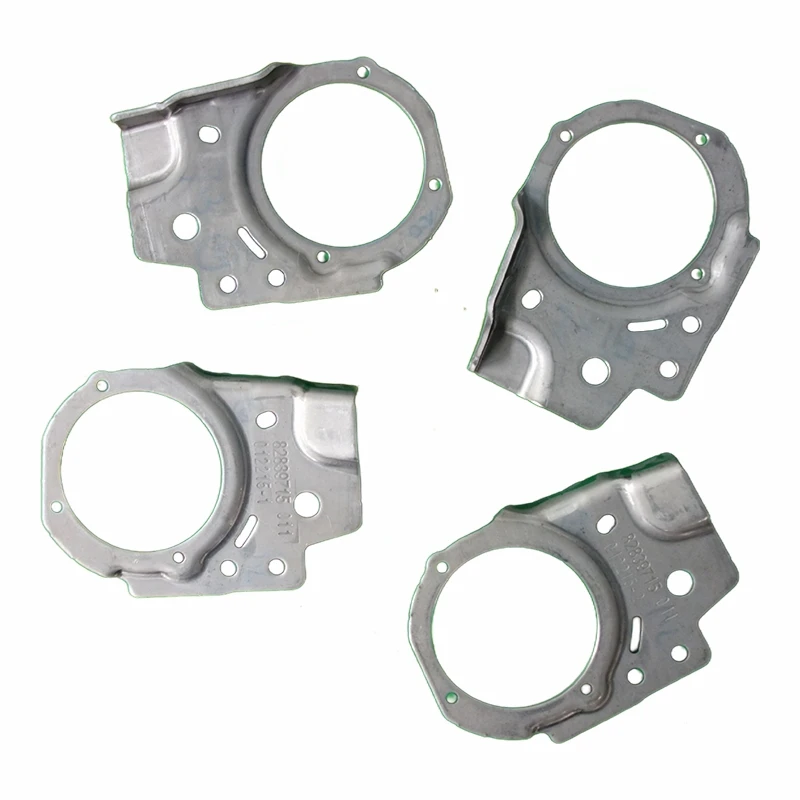
Manufacturing processes are another huge factor that shapes a stamped product's fatigue life, and not all stamping operations are equal. Let's start with the stamping itself: during bending, drawing, or blanking, the sheet metal undergoes plastic deformation, which leaves residual stresses-internal forces that remain after the tool is removed. If these stresses are tensile (pulling outward), they combine with external cyclic loads to accelerate crack growth; if they're compressive, they slow it down. For example, deep drawing a cylindrical can part can leave high tensile stresses along the side wall, which is why we always apply stress-relief annealing after drawing for parts that will see repeated load. Conversely, shot peening- a process where small particles are blasted onto the part surface-creates a thin layer of compressive stress, which has been shown to boost fatigue life by 30 to 50% for many sheet metal parts. We use shot peening for parts in heavy machinery and automotive suspension systems, where fatigue failure is a safety risk.
Another manufacturing variable is surface finish. Blanked edges, formed during the initial cutting stage of stamping, have a characteristic "breakdown" zone- a rough, uneven surface where microcracks can form. If these edges aren't deburred or trimmed, they become the primary site of fatigue crack initiation. We've encountered cases where a client's low-cost stamped component failed after just 1,000 load cycles, only to find that the blanked edges had a 0.1mm burr and a rough surface finish that acted as a crack starter. By adding a secondary deburring operation (costing less than 5% of the part's total price), we extended its fatigue life to over 50,000 cycles- a difference that saved the client from millions in warranty claims. Even lubrication during stamping plays a role: insufficient lubrication increases friction between the sheet and tool, leading to uneven deformation and higher residual stresses, while too much lubrication can cause material slipping and inconsistent part geometry, both of which hurt fatigue performance.
Then there's the environmental factor, which is easy to overlook but critical for parts operating in corrosive or extreme conditions. Corrosion creates tiny pits on the surface of a sheet metal part, which act as stress raisers just like sharp corners- each pit is a small starting point for a fatigue crack. For parts used outdoors, in marine environments, or in industrial settings with chemicals, corrosion fatigue becomes a major risk. For example, a steel bracket on a construction vehicle exposed to road salt will corrode 2 to 3 times faster than a bracket in a dry garage, reducing its fatigue life by half. To combat this, we offer surface treatments like powder coating, zinc plating, or anodizing (for aluminum parts) that create a barrier between the metal and the environment. We also work with clients to select materials with inherent corrosion resistance when possible: stainless steel for marine parts, or galvanized steel for agricultural equipment that's exposed to moisture. It's a trade-off, though: some surface treatments add a thin layer that can alter stress concentrations, so we test every coated stamped part to ensure the coating doesn't introduce new fatigue risks.
Finally, load conditions are the final piece of the puzzle, and they're tied directly to how a part is used in the real world. Not all cyclic loads are equal: a part that experiences constant, low-amplitude load will have a longer fatigue life than one that sees occasional, high-impact shocks. The number of load cycles also matters- a part used 10 times a day will have a much longer service life than one used 1,000 times a day. As a supplier, we don't just stamp parts and ship them; we work with clients to understand their part's intended use, so we can design and manufacture it to handle the specific loads it will face. For example, a door hinge for a commercial oven opens and closes 5,000 times a day, so it needs a high fatigue resistance; we test each hinge at our in-house lab to 10,000 cycles before shipping, ensuring it meets the client's requirements. If a client underestimates their load needs, a stamped component might fail prematurely- which is why clear communication about operating conditions is non-negotiable.
At the end of the day, fatigue life is a system of checks and balances: material, design, manufacturing, environment, and load all work together to determine how long a sheet metal stamping part will last. As a supplier, our goal isn't just to make a pressed part that fits a client's blueprint-it's to deliver a component that will stand the test of time, no matter what it's used for. If you're designing a new product, troubleshooting a failed stamped product, or looking to source high-quality stamped components for your next project, we're here to help. Get in touch to discuss your requirements, and we'll work with you to optimize every step of the process for maximum fatigue resistance.
References
- ASM International. (2004). Fatigue of Wrought Sheet Metals. Metals Handbook, Volume 11: Failure Analysis and Prevention.
- Juvinall, R. C., & Marshek, K. M. (2011). Fundamentals of Machine Component Design (5th ed.). John Wiley & Sons.
- Nakatani, H., et al. (2018). Effects of Residual Stress on Fatigue Life of Sheet Metal Stamping Parts. International Journal of Machine Tools and Manufacture.
- Davis, J. R. (Ed.). (2001). Metals and Materials Selection Guide. ASM International.