

Hey everyone,
If you’ve ever worked in custom stamping, you know that the die isn’t just a block of metal—it’s the backbone of every part that comes off your press. I’ve been supplying custom stamping dies for over a decade now, and one question I get all the time is: “Why does die hardness matter so much, anyway?” It’s not just a number on a material spec sheet; it changes everything from how fast you can run your line to how many parts you get before maintenance hits. Let’s break this down like we’re talking shop over coffee, no overly scientific jargon (I’ll save that for the engineering deep dives with our die designers).
First off, let’s keep this simple: die hardness is basically how resistant the die material is to being scratched, dented, or worn down when it hits the sheet metal, lubricants, or whatever else is going through the press. Too soft, and your die wears out in days. Too hard, and it might crack on the first big stamping job. As someone who builds everything from electronics stamping dies to hardware stamping dies, I see this play out on the shop floor every single week.
Let’s start with the most obvious one: wear resistance. When your die is pushing sheet metal through a stamping operation—whether that’s piercing holes, bending edges, or forming complex shapes—the die faces are rubbing against the part over and over. If the die material is too soft (think lower HRC, like 40 or 45), the tiny particles from the sheet metal (like aluminum shavings or steel debris) will start gouging into the die surface before you hit 10,000 parts. I had a customer a few months back who tried to save a few bucks on a die made with mild steel for a run of 50,000 hardware stamping parts. By the time he hit 12,000, the piercing punches were so worn that the holes were off by 0.005mm—enough to make the parts unusable. He ended up switching to a die with a harder tool steel (HRC 58-60) for the rest of the run, and that run went flawlessly. Harder dies mean less material transfer, smoother part edges, and way fewer stops to replace worn parts. That’s a big deal for lead times, right? No one wants to rush a reorder because a die gave out early.
Next up is impact resistance. Wait, hold on—softer dies wear more, but really hard dies (like HRC 62 and up) are brittle. If you’re stamping thick sheet metal or doing heavy forming, that brittle die could crack mid-cycle. I remember working on a custom stamping mould for a company making automotive suspension brackets a couple years ago. They were using a die with HRC 63 tool steel because they thought “harder = better,” but the first time they ran a 10mm thick steel blank, the draw punch split right down the middle. Turns out, that thick material needed a die with a balance: HRC 56-58. It was hard enough to resist the rubbing from the steel, but tough enough to handle the impact of slamming into the blank. Brittle dies are a nightmare—they don’t just crack; they send shrapnel flying if a part gets stuck in the press, which is a safety hazard and expensive for repairs. That’s why we always work with our customers to match die hardness to their specific stamping operation, not just pick the hardest material available.
Then there’s dimensional accuracy. When a die is hard, it holds its shape way longer. Let’s say you’re making tiny electronic stamping parts—like the connectors for phone chargers—where tolerances are tight, sometimes down to 0.001mm. A softer die will flex or wear just enough over a few thousand parts that the part dimensions shift. Last year, we did a job for a medical device client that needed 100,000 sheet metal die parts for pacemaker components. Their old die was HRC 52, and after 20,000 parts, the bend angles were off by 0.02mm—too much for FDA compliance. We built them a die with HRC 57, and over 100,000 parts, the angle only shifted 0.003mm. That’s the difference between a part that works and one that gets rejected at final inspection. For industries like electronics or medical, where even a tiny shift in size can ruin the whole product, die hardness isn’t just a performance thing—it’s a quality thing.

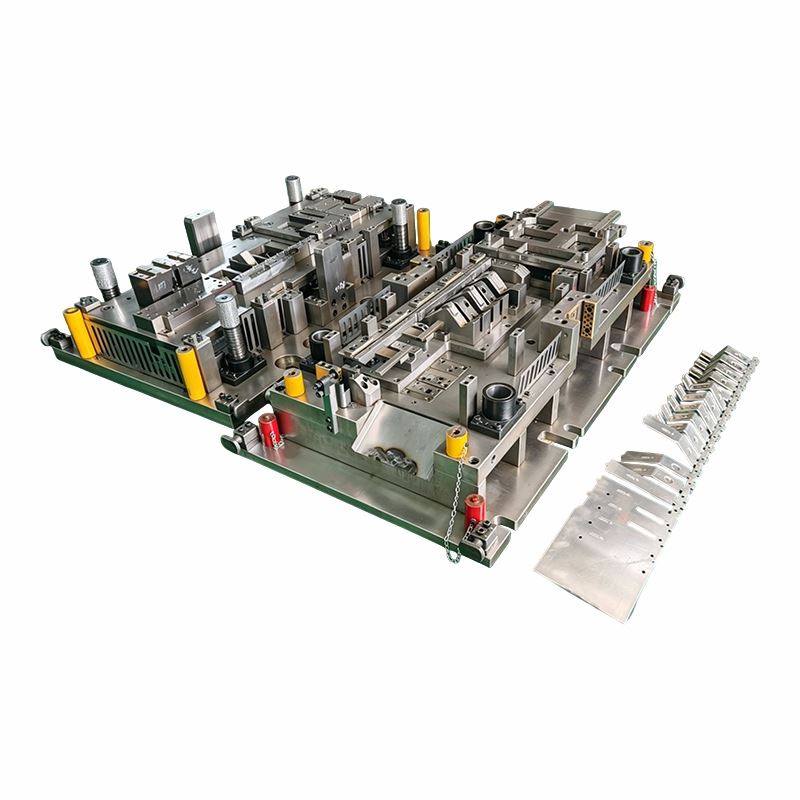
Another angle: lubrication and part finish. Wait, you might not connect die hardness to how the part looks, but I see it every day. A harder die has a smoother, more consistent surface (usually polished or coated after machining) that doesn’t grab the sheet metal as much. So the lubricant spreads more evenly, and you get parts with cleaner, shinier edges—no burrs or rough spots that need secondary deburring. If your die is soft, the surface will develop micro-grooves from wear, which catch the metal and leave burrs. That means more time spent trimming parts, which adds to labor costs and can even damage the part if you’re not careful. For hardware stamping parts, where appearance matters (like decorative brackets or hinges), a smooth finish from a hard die is a big selling point for the customer’s end product.
Now, let’s talk about common mistakes I see new stamping shops make. A lot of them think “more hard = better,” but that’s not true. If you’re doing low-volume prototype runs—like 100 parts to test a design—you don’t need a super hard die. A softer, cheaper die (HRC 45-50) works fine, since you’re not running it that much. But if you’re doing high-volume production—like 100,000+ parts—skimping on die hardness will cost you way more in the long run with maintenance, rejections, and missed deadlines. I also work with a lot of shops that mix and match hardness in different parts of the same die. The piercing punches might need to be harder (HRC 58-60) to handle constant cutting, while the forming blocks can be a bit softer (HRC 55-57) to handle impact without cracking. That’s where our custom stamping die team comes in—we design each die based on your specific job, not a one-size-fits-all approach.
And hey, don’t forget about die maintenance. Harder dies don’t require as much upkeep, but they do need different care. A really hard die can chip if you bang it with a tool when cleaning the press, so you have to be more careful during setup. Softer dies, on the other hand, might need more frequent polishing or touch-ups to fix wear spots. I always share these tips with my customers—die hardness affects not just the run, but how you maintain it day-to-day. It’s all part of getting the most out of your investment.
If you’re still on the fence about what die hardness is right for your project, here’s a quick cheat sheet from what we see in our shop:
- Low-volume/prototyping (1-10,000 parts): HRC 50-55 tool steel, good balance of cost and performance
- High-volume production (10,000+ parts): HRC 56-60, depending on material thickness (thicker steel needs slightly lower HRC to avoid cracking)
- Specialized jobs (like deep drawing or piercing thick metal): custom blend of hardness levels across die components to balance wear and impact
I could go on about this for hours—there’s a lot more to it, like how coating the die (like TiN or chrome) adds an extra layer of hardness that extends life even more—but at the end of the day, die hardness is a make-or-break factor for your stamping process. It affects uptime, part quality, labor costs, and even safety on the shop floor.
Whether you’re making electronics stamping dies, stamping moulds for automotive parts, or sheet metal die components for HVAC, getting the die hardness right is non-negotiable. If you’re tired of dies wearing out too fast, getting inconsistent parts, or dealing with unexpected downtime, hit us up to talk through your project. We’ll walk you through different material options, hardness levels, and make sure you get a die that fits your exact needs—not what you think you need.
References:
- Advanced Tool Materials for Stamping Dies, Stamping Journal, 2022
- Effect of Die Hardness on Sheet Metal Stamping Performance, Journal of Manufacturing Processes, Vol. 45, 2020
- Custom Stamping Die Design: Balancing Hardness and Durability, Metal Forming Magazine, 2023