

If you’ve ever held a printer in your hands, printed a document for work, or grabbed a photo print from a local shop, you’ve interacted with thousands of tiny, precision-made parts that keep that machine running smoothly. Most of those parts are printer stamped parts—components formed by pressing flat metal sheets into exact shapes via custom stamping dies. As a supplier who’s worked with these parts for over a decade, I’ve seen firsthand how material choice isn’t just a minor detail: it’s the foundation of a printer’s reliability, print quality, and long-term cost of ownership. A part that fails mid-print can ruin a 50-page report, waste expensive photo paper, or even damage the printer’s internal mechanisms. That’s why understanding the materials used for these stamped components matters, both for engineers designing new printers and for businesses like mine that deliver consistent, high-quality parts to OEMs and repair teams alike.
At its core, printer stamping relies on materials that balance three key needs: durability to withstand repeated operation, precision to fit tight printer tolerances, and resistance to the unique stresses printers face—think friction from moving rollers, exposure to small amounts of paper dust and toner, and even mild heat from internal fuser units. Over the years, certain materials have emerged as go-to options, each with specific use cases. Below, I’ll break down the most common ones, why they work, and where you’ll find them in a typical printer.
First on the list is cold-rolled steel (CRS), a workhorse material that’s cost-effective, easy to stamp, and strong enough for a wide range of structural parts in printers. CRS is steel that’s rolled at room temperature, which gives it a smoother, more uniform surface than hot-rolled steel, making it ideal for parts that need to fit flush or handle light loads. In printers, you’ll find CRS stamped parts in frames for roller assemblies, small brackets that hold paper feed guides, and even internal supports for the control panel casing. What makes CRS so popular for these parts is its malleability: it can be bent, punched, and shaped into complex forms without cracking, which is critical for stamping high volumes of parts quickly. That said, CRS has one big downside: it’s prone to rust when exposed to moisture, a common issue in printers stored in damp basements or near office water coolers. That’s why we often plate CRS with zinc or nickel for parts that need extra corrosion resistance, a process that adds just a small cost bump but extends the part’s life significantly.
Next up is stainless steel, a step up from CRS in strength and corrosion resistance, though a bit more expensive. Stainless steel is an alloy of iron, chromium, and sometimes other elements like nickel, and the chromium content creates a thin, protective oxide layer on its surface that resists rust, stains, and heat. In printers, you’ll find stainless steel stamped parts in higher-stress areas: fuser unit brackets that handle temperatures up to 200°C, components that come into regular contact with toner (which can contain small abrasive particles), and parts that need to hold up to heavy use in commercial printers that run 24/7. Unlike CRS, stainless steel doesn’t need extra plating for most printer environments, which simplifies the manufacturing process for parts that demand long-term durability. The only tradeoff is that stainless steel is harder to stamp than CRS, so it requires more precise tools and careful process control—something our team has mastered after years of refining our stamping techniques for high-grade alloys.
If you’ve ever used a laser printer or an inkjet with advanced connectivity, you’ve probably encountered parts made of copper or copper alloys. Copper is a standout here because of its exceptional electrical conductivity, a property that’s non-negotiable for printer stamped parts that handle electrical signals. Printers rely on a network of small terminals, contact springs, and connectors to send data from a computer to the print head, and those components need to transmit signals quickly and consistently without overheating. Pure copper is too soft for high-stress stamping, so we almost always use phosphor bronze or brass alloys for these electrical parts. Phosphor bronze, for example, has a small amount of tin and phosphorus added, which boosts its strength and elasticity—critical for contact springs that need to flex thousands of times without losing shape. Brass, a mix of copper and zinc, is another popular choice, balancing conductivity with lower cost than phosphor bronze. These copper-based stamped parts are so central to printers that we even have a dedicated page on our website for electrical contact stamped parts, which details how we engineer these components to withstand repeated mating cycles in printer ports and internal circuit connections.
Aluminum is another material that’s gained traction in printer manufacturing, especially in newer, lighter, and more compact desktop and all-in-one printers. Aluminum is lightweight, has excellent thermal conductivity, and is easy to stamp into thin, precise parts—making it perfect for heat sinks that cool the print head, thin brackets that hold small, delicate components, and even some structural parts for portable printers. Unlike steel, aluminum doesn’t add much weight to a printer, which is a big selling point for consumers who want a printer that’s easy to move between offices or set up at home. Aluminum also resists corrosion well without plating, which simplifies the supply chain for manufacturers who need to keep costs low. That said, aluminum is softer than steel, so it’s not ideal for high-stress parts that need to hold heavy loads, like the internal frames of commercial printers that process hundreds of sheets a day. For those uses, steel or stainless steel is still the better choice, but aluminum has carved out a valuable niche in modern printer design.

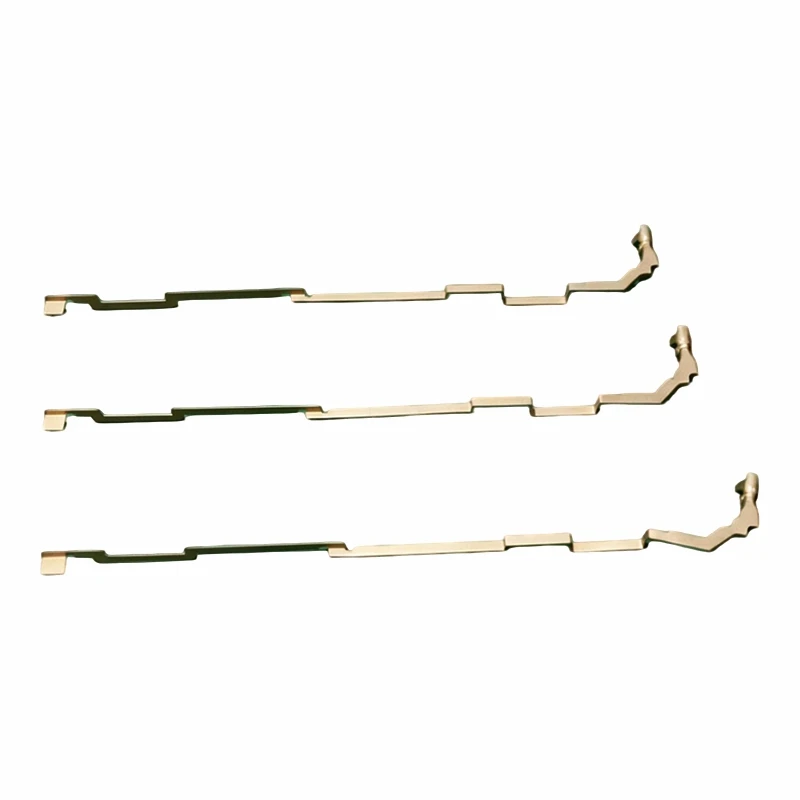
Mylar, or polyester film, might not be a metal like the other materials I’ve mentioned, but it’s a common material for stamped parts in printers, especially in components that need to be flexible, electrically insulating, or resistant to chemicals. Mylar is a thin, tough plastic film that can be stamped into complex shapes, and it’s often used as a separator between electrical components to prevent short circuits, as a backing for adhesive pads that hold paper guides in place, or even as a thin layer in some inkjet printer nozzles. What makes Mylar unique is its combination of flexibility and stability: it doesn’t stretch or warp easily, even when exposed to small amounts of toner or printer cleaning fluids. While Mylar parts are often made with smaller stamping presses or even die-cutting equipment, they’re a critical part of the overall printer stamped parts ecosystem, working alongside metal components to keep the machine running smoothly.
When it comes to specialized printer parts, two materials stand out for their unique performance: beryllium copper and titanium. Beryllium copper is an alloy of copper and small amounts of beryllium, and it’s one of the strongest copper alloys available, with excellent elasticity and wear resistance. It’s used in high-end printers for contact springs that need to flex millions of times without failing, like those in the print head assembly. Titanium, meanwhile, is ultra-strong and lightweight, though it’s much more expensive than other materials. Titanium stamped parts are rare in consumer printers, but they’re used in industrial printers that handle heavy-duty tasks, like printing large format banners or architectural plans, where parts need to withstand extreme stress and last for years of continuous use.
Choosing the right material for a printer stamped part isn’t just about picking the strongest or cheapest option—it’s about matching the material’s properties to the part’s specific role in the printer. For example, a structural bracket that’s subject to vibration from the paper feed mechanism needs high tensile strength, so steel is a better fit. A contact spring that needs to conduct electricity and flex thousands of times needs the elasticity and conductivity of phosphor bronze. A heat sink for a modern compact printer needs the lightweight, thermal properties of aluminum. As a supplier, we work closely with printer OEMs to understand their specific needs, whether that’s a low-cost part for a mass-market desktop printer or a high-precision component for a commercial model. This collaborative approach is why we’re able to deliver parts that don’t just fit, but perform—something that’s reflected in the positive feedback we’ve received from clients for our Precision Terminal Stamping Parts and other electronic stamping components.
One area where material choice is especially critical is in parts that interact with printer consumables, like paper and toner. Paper dust is abrasive, so parts that come into contact with paper feed rollers or guides need to be resistant to wear to avoid producing debris that can jam the printer. Toner, which is a fine plastic and iron powder, can be corrosive over time, so parts that hold toner cartridges or transport toner need to resist chemical attack. For these applications, we often recommend coatings like electroless nickel or chrome plating on steel parts, which add a hard, smooth surface that resists both abrasion and corrosion. For copper parts, a thin tin plating can prevent toner from sticking, which is a common issue that causes print quality errors.
It’s also worth noting that the trend toward smaller, more energy-efficient printers has shifted material choices in recent years. Modern printers have fewer internal parts, and those parts are much smaller and more precise than they were a decade ago. This has led to an increase in the use of specialized alloys and thin-gauge materials that can be stamped into tiny, complex shapes. For example, many new inkjet printers use stamped stainless steel parts for the print head’s internal nozzles, which are just a few microns wide, requiring material that’s both precise and resistant to the high temperatures and chemicals involved in inkjet printing.
As someone who’s seen the evolution of printer stamped parts over the past decade, I can say that material science has been a huge driver of that change. Twenty years ago, most printer parts were made of basic steel and brass, but today, manufacturers have access to a wider range of materials, from lightweight aluminum to high-performance alloys, that allow them to build printers that are smaller, faster, and more reliable. That’s why we invest so much in staying up-to-date with new material technologies and refining our stamping processes to work with them. For example, our team recently added the capability to stamp thin-gauge titanium parts for a new line of large-format industrial printers, a project that required us to update our dies and process controls to handle the material’s unique properties.
Of course, even with the best material choice, a part is only as good as the stamping process that forms it. That’s why our facility uses precision stamping equipment that can hold tolerances of just a few thousandths of an inch, ensuring that each part fits perfectly into the printer’s assembly. Whether it’s a small electrical contact stamped part, a frame for a paper roller, or a precision terminal that connects the printer to a computer, every part is engineered to meet the exact specifications of our clients. We also work with clients to test materials in real-world conditions, simulating years of use in a printer to make sure the parts hold up to fatigue, heat, and exposure to toner and paper dust.
If you’re a printer OEM, a repair service, or a business looking for consistent, high-quality printer stamped parts, choosing the right material is only the first step—partnering with a supplier who understands both material science and the unique needs of printer components is what makes the difference between a part that lasts a year and one that lasts a decade. We’ve built our reputation on that expertise, working with clients across the industry to deliver parts that meet their performance and cost targets. Whether you need components for a consumer desktop printer, a commercial laser printer, or a specialized industrial printer, we can help you select the right materials and design the parts to fit your needs. Our work also extends to other industries that rely on precision stamped components, including projectors and connectors, which you can learn more about on our Projector Stamped Parts and Connector Stamped Parts pages.
At the end of the day, printer stamped parts might be small, but they’re the unsung heroes of every printing job. A single faulty contact can cause a printer to fail to send a job, a rusted bracket can jam the paper feed, and a poorly sized terminal can prevent a printer from connecting to a network. That’s why material choice matters, and why a trusted supplier who knows how to work with those materials is essential. If you’re looking for a partner to help you source high-quality printer stamped parts, we’re here to help. Don’t hesitate to reach out to our team to discuss your project, whether it’s a small run for a prototype or a large volume order for full-scale production.
(References)
- The Metal Stamping Society. (2022). Materials Selection for Precision Stamped Components. Retrieved from https://www.metalstamppingsociety.org/materials-selection-guidelines
- Printer OEM Association. (2021). Internal Component Design & Material Standards for Commercial and Desktop Printers. Retrieved from https://www.printeroemassociation.org/component-materials
- Copper Development Association. (2020). Copper Alloys for Electrical Stamping Applications. Retrieved from https://www.copper.org/resources/profiles/electrical-stamping-alloys
- Aluminum Association. (2023). Aluminum Alloys for Lightweight Mechanical Components. Retrieved from https://www.aluminum.org/design/materials-mechanical-components