

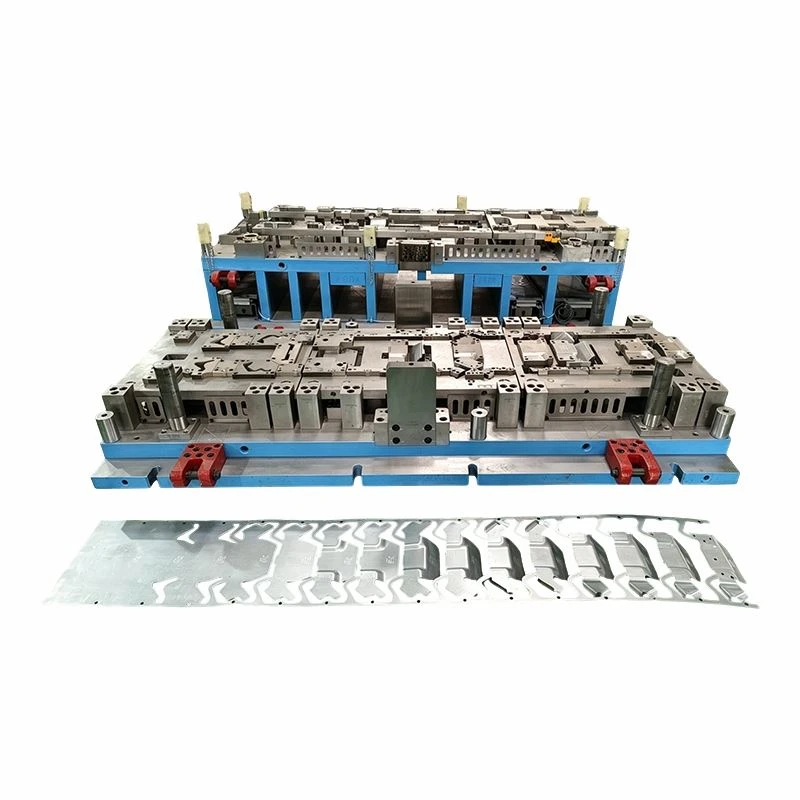
Progressive sheet metal dies are commonly used for brackets, covers, clips, terminals, small reinforcements, and other components with repeat demand. A sheet metal progressive die is most effective when the part can be fed from coil and the operations can be arranged without weakening the carrier too early. The layout may include blanking, piercing, embossing, bending, restriking, and cutoff. Product geometry determines the station count; adding stations only to make a layout look complex increases cost and maintenance without improving the part.
The Progressive Sheet Metal Die should guide the material through each form without pulling the strip away from its pitch reference. Progressive metal stamping dies use pilots, lifters, pressure pads, and carrier bridges to manage this movement. For shallow drawing or wide flanges, the forming direction and local material flow should be reviewed before the die steel is machined. A progressive sheet metal stamping die may need an idle station between severe forms to reduce interaction or provide room for the strip to settle. CAE simulation is useful for higher-risk profiles, but trial-strip evidence remains necessary for final tuning.
A progressive stamping die set is checked for more than final dimensions. Inspectors compare hole position, trimming line, bend angle, flatness, profile, burr height, and tool marks at selected stations. The Progressive Sheet Metal Die must also maintain stable feeding as punches wear and coils vary within the approved material specification. Contact surfaces are polished where needed, and sensitive visible areas are protected from dragging. At cutoff, controlled dropping off prevents the finished part from striking scrap or the edge of the chute.
FAQ
Hot Tags: progressive sheet metal die, China progressive sheet metal die manufacturers, suppliers, factory


