

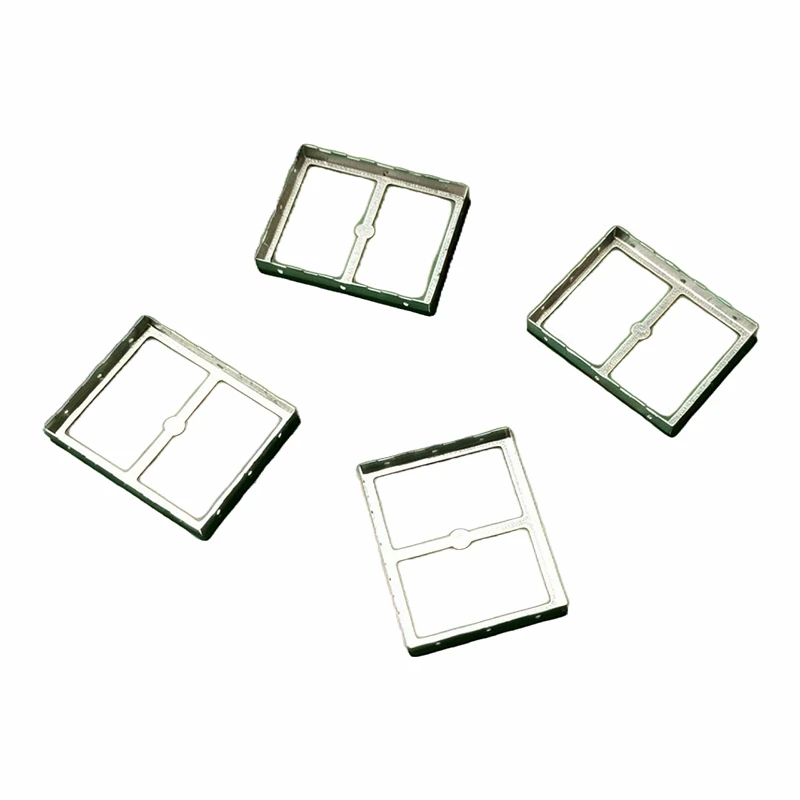
Printer Stamped Parts
Changdong manufactures Printer Stamped Parts from customer drawings. The material reference on this page is 0.2 mm Phosphor Bronze 1/2H.
This material is often selected when a small stamped feature needs to keep some spring response after forming. In our tooling review, we therefore look at more than the finished outline. The free position of the spring area, the working bend, the mating point and the amount of deflection in assembly may all matter.
We do not apply one fixed process to every printer component. The route is decided from the actual drawing, material condition, production quantity and the way the part is used in the printer assembly.
Product Parameters
|
Item |
Specification |
|
Product Name |
Printer Stamped Parts |
|
Material |
Phosphor Bronze 1/2H |
|
Material Thickness |
0.2 mm |
|
Tooling Route |
Confirmed From Part Geometry and Production Requirement |
|
Project Data |
2D Drawing / 3D Data / Material Specification / Surface Requirement / Mating Information |
|
Changdong Scope |
Tool Design / Tool Manufacturing / Trial Stamping / Inspection / Production |
The Free Position Matters Before the Part Is Installed
With a spring-type stamped part, the dimension on the drawing is sometimes only half of the story.
A formed arm may sit at one height when the part is free and move to another position after it is assembled. If that feature is supposed to touch a sensor, grounding point, cartridge component or another mating surface, both conditions can be important.
During sample work, we first check the released part. The tool may hold a bend very accurately while the press is closed, but Phosphor Bronze 1/2H will still respond after the pressure is removed.
If the customer also provides the installed position or required deflection, we can compare the free-state geometry with the working condition instead of trying to judge the spring feature from one angle measurement alone.
That is much more useful when the stamped feature actually has to move during assembly.
0.2 mm Material Makes Small Shape Changes Easy to See
At 0.2 mm, a narrow finger or small bridge does not need much unwanted force before its position changes.
That can happen during cutting, forming, part release or later handling. For this reason, we look at the finished feature itself rather than assuming that a correct punch profile automatically gives a correct spring part.
A narrow arm can twist slightly. A broad flat section can curl after blanking. A bend close to a pierced opening can move that opening relative to the rest of the component.
When we see that kind of change during tryout, the sample stays with the toolmaker. We want to know whether the movement starts during cutting, forming or release before another correction is made.
On a small printer component, even a slight local change can affect how the part sits in the next assembly.
Spring Force Cannot Be Read From the Bend Angle Alone
If the part has a real spring function, we prefer the customer to provide the working requirement rather than only the nominal free angle.
Two samples can have a very similar free shape and still behave differently when deflected. Material temper, bend radius, formed length and the exact location where the mating part pushes on the spring all influence the result.
This is why the 1/2H condition is important project information. We keep the specified material condition tied to the tooling review instead of treating phosphor bronze as one generic material family.
Where spring force or repeated deflection is a controlled requirement, that test condition should come from the customer specification. Changdong can then use it together with the dimensional sample review.
Cutting a Small Feature Without Disturbing the Spring Area
For thin phosphor bronze, the cut edge and the feature beside it have to be considered together.
A narrow slot may measure correctly at its center while burr or rollover reduces usable clearance along the edge. A very small bridge can also pull to one side if the surrounding cutting work is not balanced well.
We check the real stamped result under suitable magnification when the feature size requires it.
Burr direction is taken from the drawing and assembly requirement. If the edge faces a sensor, plastic housing, cable, cartridge mechanism or another moving part, that direction may matter more than it would on a completely enclosed edge.
The same applies to sharp corners. We avoid adding extra edge work without considering the thin spring geometry around it, because an aggressive secondary operation can change a feature that was already correct after stamping.
Printer Assembly Gives the Dimensions Their Priority
A small stamped part can contain several tight dimensions, but we still want to know which ones actually locate the component inside the printer.
One hole may only provide clearance. Another slot may position the part against a molded housing. A spring finger may need to reach a sensor or conductive surface. Those features do not all deserve the same inspection priority.
If mating information is available, we use it during drawing review. It is often easier to understand why a tolerance is tight when we can see what the stamped part is expected to touch.
For Printer Stamped Parts, our sample discussion is therefore based on the finished assembly relationship rather than simply producing a long list of measured dimensions.
Surface Finish and Plating
Phosphor bronze parts may be supplied bare or with another surface-treatment requirement, depending on the application.
We need to know whether plating is already present before stamping or will be added later. A pre-plated strip places different limits on tool contact from bare material that will receive a finish after forming.
If one small area is used as a contact surface, marking that area on the drawing is useful. We can then distinguish a functional surface requirement from an ordinary hidden area.
This avoids two opposite problems: protecting every surface unnecessarily, or discovering too late that one small working area needed tighter control.
Delivery Form Is Decided From the Next Assembly Step
Very small spring parts are not always convenient to deliver loose.
Depending on the customer process, the component may remain on carrier strip, be supplied in trays, or use another controlled packing method. We prefer to know that requirement before the tool is finalized.
If the part remains on strip, orientation and pitch have to suit the customer's next operation. If the parts are loose, we need to consider whether spring fingers can hook together or become bent during bulk handling.
Packaging is therefore connected to part geometry. A strong rigid stamping and a 0.2 mm spring clip do not need to leave the factory in the same way.
For a New Printer Part Inquiry
Please send the controlled 2D drawing and 3D data if available. For phosphor bronze, the exact material specification and temper should be included.
If the part has a spring-force requirement, working deflection or repeated-cycle condition, that information is useful during tooling review. We also need to know the expected quantity, plating condition and preferred delivery format.
Mating-part information is helpful where a small stamped feature has a specific locating, sensing or contact function.
With those details, Changdong can review the tooling concept without assuming that every printer spring component works the same way.
Changdong Manufacturing Support
Changdong designs and manufactures stamping dies and can continue into stamped-part production after tooling development.
Our Dongguan tooling operation includes CNC machining, six WEDM machines, EDM, grinding, drilling, fitting and press tryout. Small spring features can therefore be reviewed together with the physical tooling when sample adjustment is required.
For customers sourcing Printer Stamped Parts, we can support the project from drawing review and tool build through samples, inspection and regular production.
Hot Tags: printer stamped parts, China printer stamped parts manufacturers, suppliers, factory, brass stamped parts, electronic sheet metal stamped parts, precision electronic contacts, precision electronic stamped components, precision stamped battery terminals, stamped electrical connector components


