

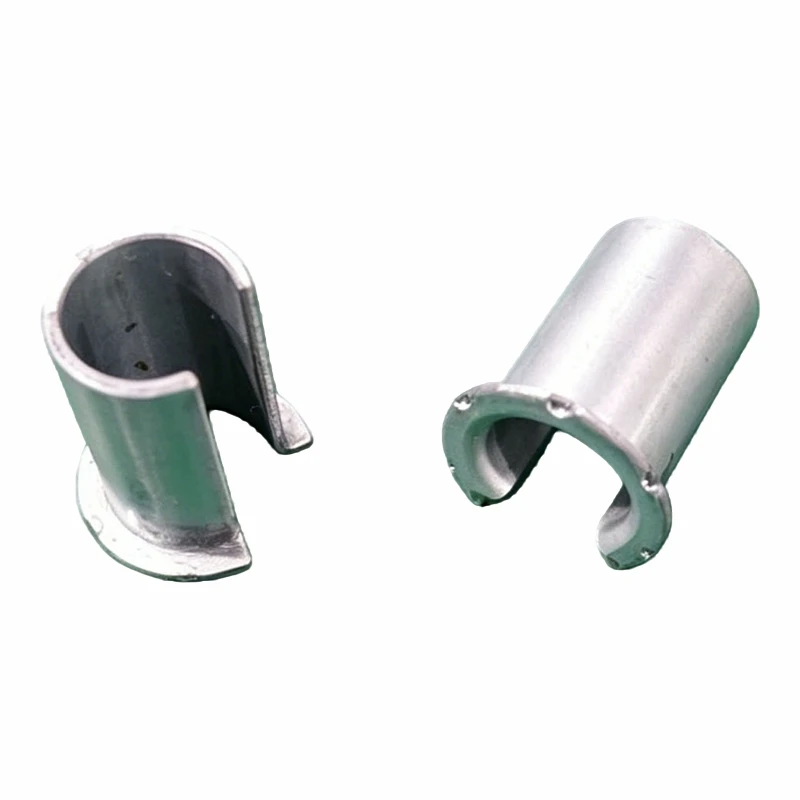
Washing Machine Stamped Parts – Panasonic Project
These Washing Machine Stamped Parts were developed for a Panasonic washing-machine program. The material is 1.4 mm SGCC. Main production is carried out with a 20-station progressive die, followed by one separate single-operation die.
The strip is 73 mm wide with a 45 mm pitch. One part is produced per stroke after the tooling reaches its normal production condition.
We only have one project photo for this page, but it is a useful one: the die is open and the actual strip is laid in front of it. You can see the tooling and the process piece in the same view rather than looking at an empty die alone.

Product Parameters
|
Item |
Specification |
|
Product Name |
Washing Machine Stamped Parts |
|
Customer Project |
Panasonic Washing-Machine Program |
|
Material |
SGCC |
|
Material Thickness |
1.4 mm |
|
Strip Width |
73 mm |
|
Pitch |
45 mm |
|
Main Tool |
20-Station Progressive Die |
|
Secondary Tool |
1 Single-Operation Die |
|
Output |
1 Part per Stroke |
Project Notes
Twenty stations is a long process for a strip with only 45 mm pitch. That does not mean every station is carrying a major cutting or forming operation. It means the released process needs that amount of working length to bring the part from incoming strip to the required condition.
We keep the station functions tied to the actual project data. Without the released process drawing, we do not label OP positions as piercing, bending, restrike or cut-off simply because they appear at a certain point in the strip.
What we can see from the real project is the relationship between the carrier and the part. The workpiece stays connected to the strip for a long distance. As more work is completed, the carrier still has to move everything through the remaining stations without becoming loose or unstable.
This is one reason the strip was kept with the tooling during tryout. If a later sample is wrong, the loose finished part only tells us the final result. The strip can show whether that difference started much earlier.
If the strip is already twisting in the middle of the die, there is little value spending time adjusting the last station first.
The Strip in Front of the Die
The strip in the photograph is more useful to us than a second beauty shot of the tool.
During die clamping and tryout, the team can put the strip back beside the open die and point to a specific position. That makes discussions between the designer, toolmaker and press operator much easier. Everybody is looking at the same station and the same physical condition.
Carrier width is checked along the route, especially after areas where more material has already been removed. Pilots need enough material around them to do their job. A bridge that looks generous at the first few stations can become much less rigid after several later features are introduced.
The 45 mm feed also has to repeat properly. A progressive die cannot depend on an operator pushing the strip into position by hand. Once the feeder is running, the tool has to accept the same pitch again and again.
We also check the underside of the strip during tryout. Marks there can tell us that the strip is dragging somewhere, sitting on scrap or contacting an area that was not expected to carry it.
These are small observations, but on a twenty-station die they are usually more useful than a general comment such as "feeding is not stable."
Progressive Tool Plus One Separate Die
The twenty-station progressive tool does not complete the entire released process. There is another single-operation die after it.
We have not been given enough information to state the exact function of that secondary die on this page, so it is better not to invent one.
From a production point of view, however, that extra operation matters. The part coming out of the progressive die becomes the incoming part for the next tool. If the progressive process leaves the component in a different condition from the one used during fitting, loading the secondary die will immediately become less consistent.
We check how the real stamped part sits in that tool. Ideally, the operator places it against the intended locating surfaces and it sits naturally. If the part has to be twisted or pressed down just to reach the locators, we want to know whether the problem comes from the incoming part or from the nest itself.
That distinction saves time during correction. Otherwise it is easy to change the second die to accept a problem that actually began in the progressive process.
For this Washing Machine Stamped Parts project, both tools belong to the same production route even though they are physically separate.
What We Pay Attention to During Tryout
Feed first. We watch whether the strip keeps its 45 mm progression and whether the pilot condition remains normal after the tool has cycled repeatedly.
Then the carrier. A strip can feed correctly at the entrance and still become less stable after several stations. If the material around the carrier starts opening or twisting, the later stations receive a different strip from the one assumed during design.
Scrap gets its own check. A slug falling correctly once does not prove that it will continue falling after the tool is running. We look for pieces hanging near a cutting insert, sitting in a chute or bouncing back toward the strip. Scrap should leave the working area without somebody having to stop the press and clear it by hand.
Part dropping off is also practical, not theoretical. At the end of the route the loose part should leave as intended. If it stays attached, turns over in the wrong place or requires the operator to pull it free, we continue working on that area.
The last point is the finished sample. During early tryout, we normally do not spend time polishing every small issue at once. We first want the strip to feed, the tool to cycle and the part to come out consistently. Once that is stable, local dimensional and surface corrections become much easier to judge.
SGCC During Repeated Strokes
The 1.4 mm SGCC also gives the toolmaker a few things to watch that may not appear on the first sample.
After repeated strokes, material can begin building on local contact areas. If a surface mark appears in the same position on several parts, we open the die and compare that point with the strip. Sometimes cleaning the working surface is enough. Sometimes the material is rubbing harder than expected and the contact needs adjustment.
We try not to grind first and ask questions later.
The same applies to burr. If an edge starts getting worse over a run, that is usually more useful information than discovering one heavily burred part at the end. The responsible cutting area can be checked while the change is still small.
A twenty-station die has many working areas, so changing several things at once makes troubleshooting harder. We normally mark the sample, identify the station and make one understandable correction before checking the next result.
Changdong Handles the Tooling Behind Production
Changdong made the tooling for this program, so the die does not become somebody else's responsibility once part production starts.
If a punch or insert needs attention, the stamped part and the tool can go back to our tool room together. When WEDM, CNC, EDM, grinding or fitting work is required, it is handled against the actual production issue rather than a written description sent to an outside toolmaker.
This is particularly useful after the die has already been running for some time. Normal wear is different from development work. A cutting component may only need sharpening. A contact area may only need cleaning. Another component may genuinely need replacement. Those jobs should not all be treated the same way.
Our role on a stamped-parts order is to keep that tooling work behind the production program. The customer is ordering parts, not coordinating every maintenance action inside the die.
Finished-Part Check
After the progressive route and the secondary operation are complete, the loose component is checked against the released Panasonic drawing.
The drawing, not the number of stations, decides what gets priority. If a hole controls assembly, its position matters. If a formed tab locates another component, that condition matters. Burr, surface marks and local profile are checked where the project requirement calls for them.
We also look at consecutive pieces rather than selecting one especially good sample from the press. A process that produces one correct component and then starts moving is not yet ready for production quantity.
Once the result is stable, that condition becomes the shop-floor reference for later runs and for checks after normal tool service.
The twenty-station die may be the most complicated part of the manufacturing system, but the delivered item is still the finished Washing Machine Stamped Parts required for the Panasonic assembly.
Hot Tags: washing machine stamped parts, China washing machine stamped parts manufacturers, suppliers, factory, air conditioner stamped parts, appliance support brackets, home appliance stamped parts, home appliance support brackets, precision appliance stamping parts, refrigerator metal stamping parts


