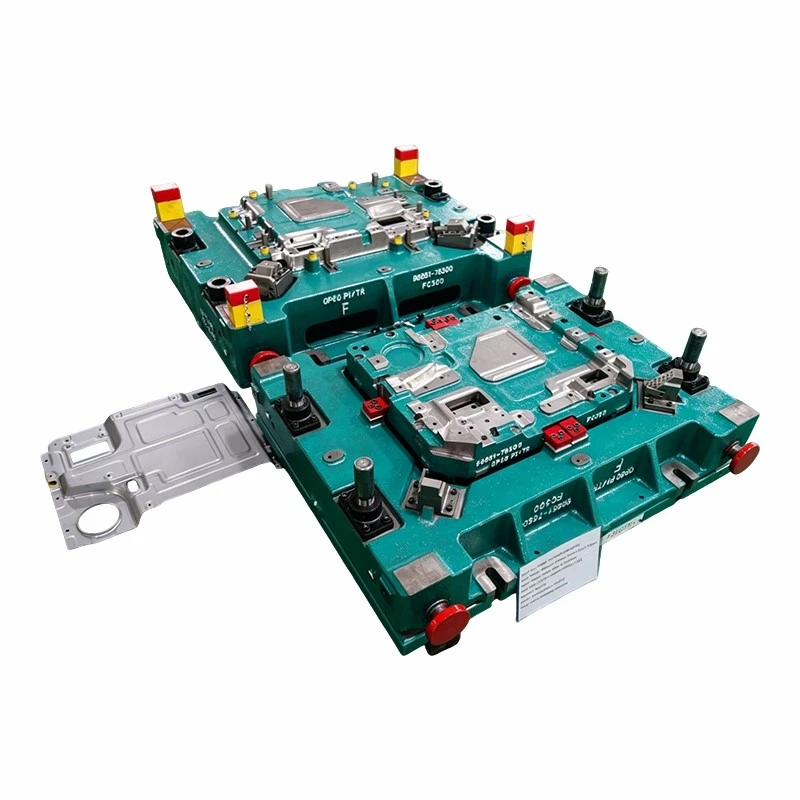
Molds are categorized into three types based on the material being processed: metalworking molds, plastic molds, and specialized molds.
Metalworking molds include stamping molds (such as blanking, bending, deep drawing, hole flanging, necking, embossing, bulging, and sizing molds), forging molds (such as die forging and upsetting molds), extrusion molds, and die-casting molds. Non-metallic molds are divided into plastic molds and inorganic non-metallic molds.
Molds can also be classified according to the material from which the mold itself is made, such as sand molds, metal molds, vacuum molds, and wax molds. Among these, plastic molds have become closely linked to daily life due to the rapid development of polymer plastics. Plastic molds generally include injection molding molds, extrusion molding molds, and gas-assisted molding molds.
Definition of a mold: A mold is a tool or device used in industrial production to shape desired products through processes such as injection molding, blow molding, extrusion, die-casting, forging, smelting, or stamping. Simply put, a mold is a tool used to manufacture shaped objects; it is composed of various components, with the specific configuration depending on the type of mold. It primarily shapes objects by altering the physical state of the material being processed. Molds are often referred to as the "Mother of Industry."