

Product Parameters
|
Item |
Specification |
|
Product Name |
Press Tool Making |
|
Press Tonnage |
250 T |
|
Tooling Type |
Progressive Die |
|
Cavity |
1 |
|
Feed Material |
Coil |
|
Blanking Size |
2.5T x 253W x 65P mm |
|
Available Tooling Footprint |
1600L x 870W mm |
|
Tooling Weight |
2232 kg |
|
Upper Die Weight |
1116 kg |

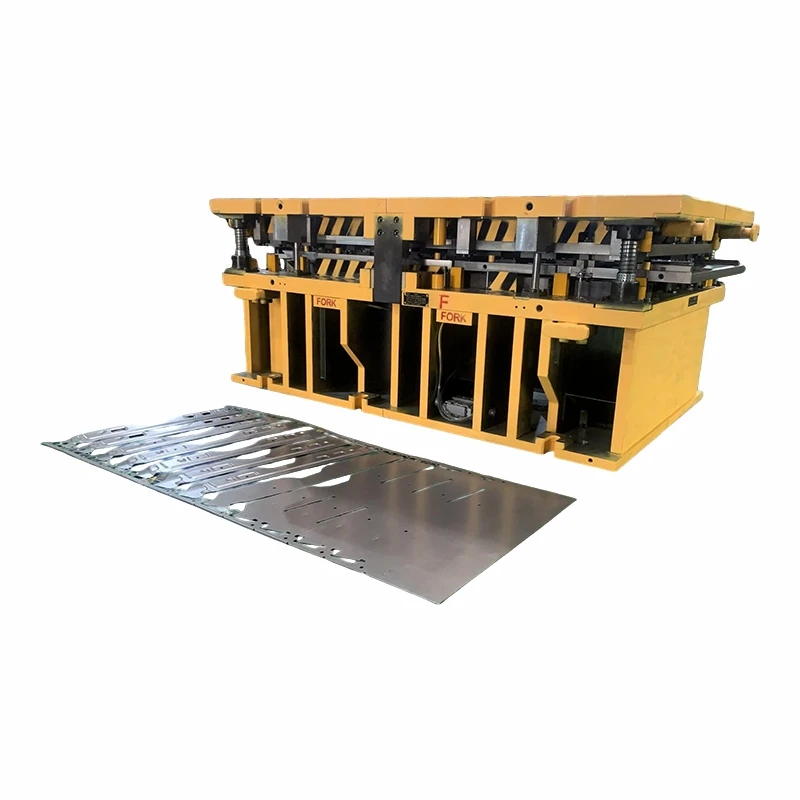
A metal press tool making set for 2.5 mm material needs firm strip support and a realistic force balance. The 65 mm pitch leaves limited distance for pilots, cutting, forming, and carrier transitions, so station spacing should be checked against punch strength and scrap clearance. For this Press Tool Making, the one-cavity layout simplifies lane balance but does not remove the risk of off-center load. The center of pressure should remain compatible with the press, especially if forming and cutoff loads occur near the same stroke position.
Press tool making components must suit the nominated 250 T machine in more than tonnage. Bolster area, shut height, stroke, feeder location, energy, and die clamping points need confirmation. A press tool making assembly weighing 2232 kg also requires approved lifting points, handling instructions, and support during storage. The 1116 kg upper section is relevant to crane selection and safe separation. A sheet metal press tool making set should include safety blocks and clear maintenance positions so technicians do not rely on the press ram to hold the tool open.
The production press tool making should use replaceable punches and die inserts in expected wear zones, with guide elements and stripper parts accessible for adjustment. The Press Tool Making tryout checks feed pitch, pilot entry, hole position, forming angle, trimming line, burr direction, and part dropping off. Coil scrap needs a direct path away from the lower die. If the scrap shape tends to bridge, an embossed-sheet chute or pneumatic cylinder-driven vibrator can improve discharge without changing the working operation.
Please provide the complete 250 T press specification, die technical standards, 2D drawing, and 3D drawing. Material grade, coil condition, feeder data, annual volume, inspection plan, and site lifting limits should be added. These inputs allow the engineering team to verify the strip route, press fit, tool construction, and handling provisions before the design is released for machining.
Hot Tags: press tool making, China press tool making manufacturers, suppliers, factory


