

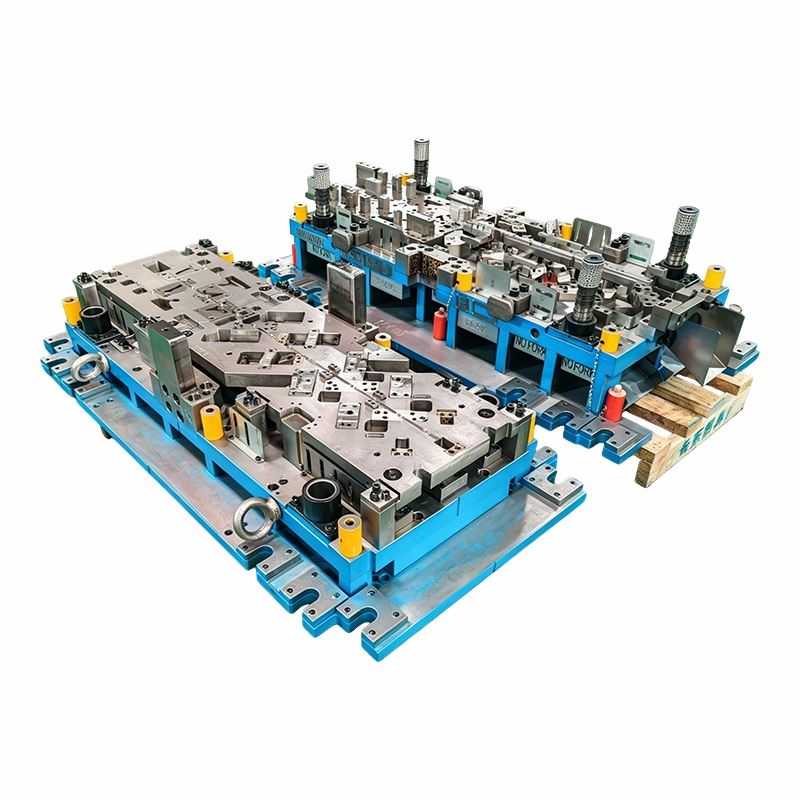
A metal forming metal press die may be suitable when the part needs one controlled shape change, while a sheet metal production die can include cutting and forming operations arranged for repeated output. The Metal Press Die study should identify which features are created by material flow and which are established by trimming or piercing. A press forming die with a deep wall or reverse flange may need intermediate operations. By contrast, a simple bracket may be made with fewer stages if the hole position and bend angle can remain stable.
The first engineering task is to reconcile the 2D dimensions with the 3D surface or profile. Functional datums, joining points, trimming line, and critical radii are marked before the process proposal is prepared. For a production metal press die using difficult material or complex geometry, CAE simulation can help evaluate thinning, wrinkling, and springback. It does not replace tryout; it gives the toolmaker a better starting condition and helps avoid cutting the initial blank or forming surface without understanding the likely material movement.
An industrial metal press die needs a structure that carries load without blocking service access. Working inserts are selected by operation, with wear-resistant steels at cutting areas and tougher materials where shock or broad forming loads are expected. The Metal Press Die layout also covers guide parts, pressure elements, lifters, sensors, lifting points, die clamping, and scrap paths. Press tonnage is only one check. Bolster size, shut height, stroke, daylight, energy, feed or transfer equipment, and off-center load must agree with the final design.
FAQ
Hot Tags: metal press die, China metal press die manufacturers, suppliers, factory


