

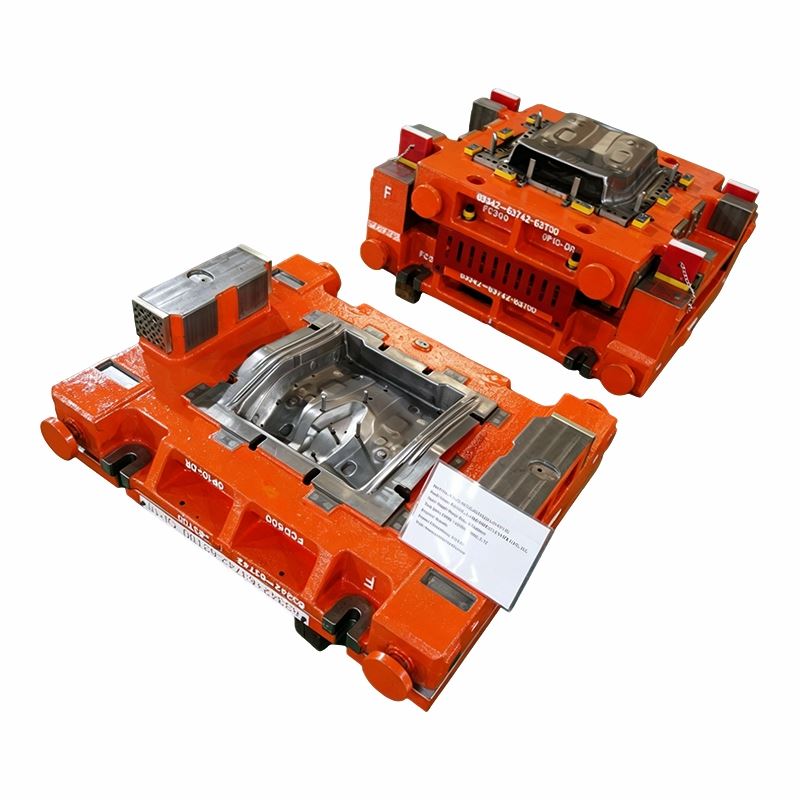
Tandem Die for Suzuki Lamp House Inner Upper Panel R/L
This Tandem Die is a single-stage automotive stamping tool for the Suzuki Panel, Lamp House Inner UPR, R/L project.
The completed die measures approximately 1300L × 1130W × 630H mm and weighs about 3.7T. Unlike a progressive tool, this die does not carry the part through several operations inside one die set. It receives an intermediate part from the previous operation, performs its assigned work, and delivers a new condition for the next stage.
That makes the incoming and outgoing part condition especially important. The die may be correct by itself but still create trouble on the tandem line if the part cannot be located consistently before stamping or handed over cleanly afterward.
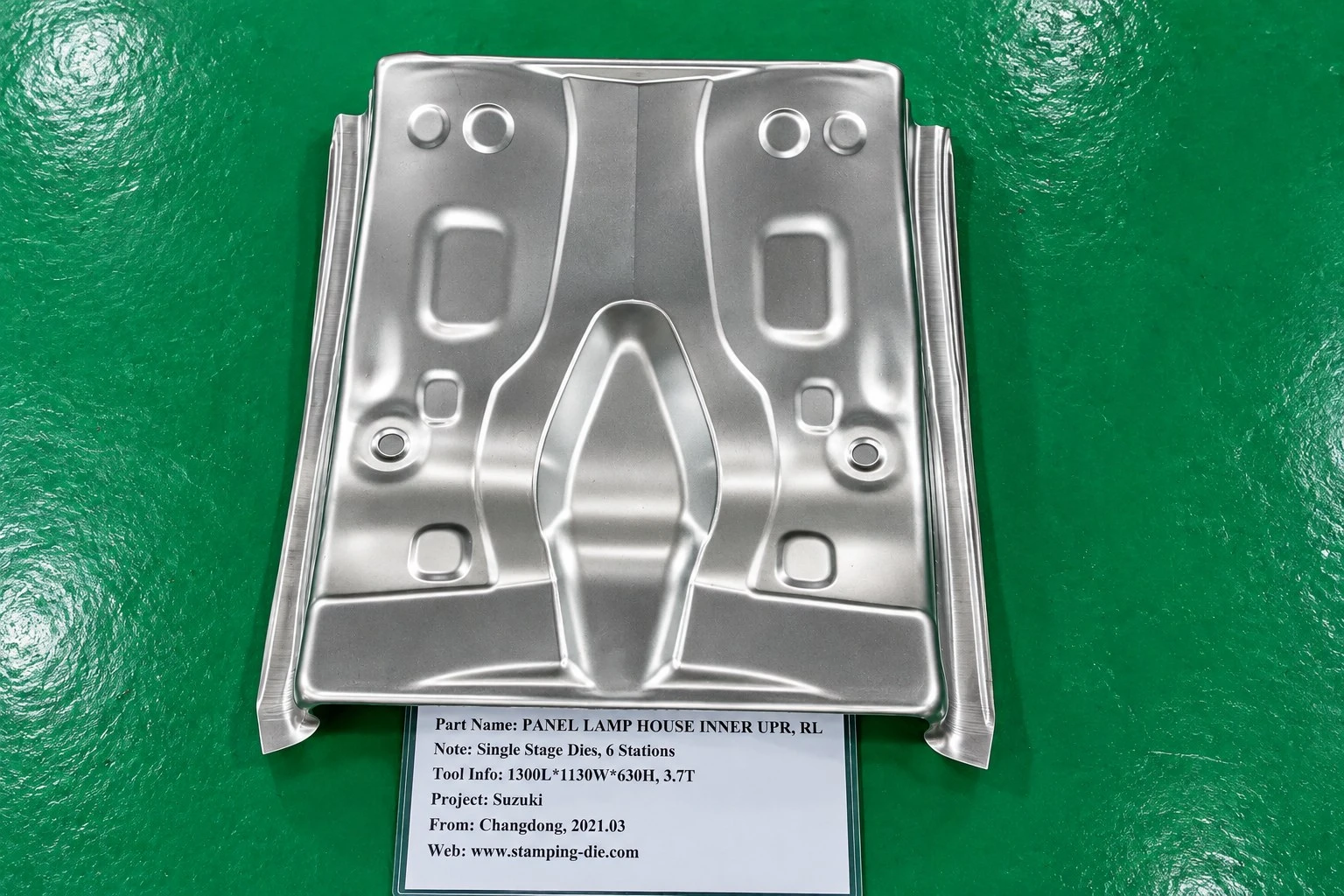
Product Parameters
|
Item |
Specification |
|
Product Name |
Tandem Die |
|
Project |
Suzuki |
|
Application |
Panel, Lamp House Inner UPR, R/L |
|
Tooling Type |
Single-Stage Die for Tandem Stamping |
|
Tooling Size |
1300L × 1130W × 630H mm |
|
Tool Weight |
3.7T |
R/L Parts Share an Assembly Area, Not Every Detail
The right- and left-hand lamp-house inner upper panels belong to the same body area, so much of the general process logic may be related. That does not mean every feature should be treated as a perfect mirror.
A local flange, hole, relief or joining surface may differ between RH and LH. During tryout, each side is therefore checked against its own released geometry rather than accepting one side because the other side is correct.
This distinction matters most near body assembly interfaces. A small local difference can affect locating or joining even when the two stamped panels look nearly identical from a distance.
The Incoming Part Is Part of the Die Setup
The part entering this stage has already been changed by an earlier operation. Its free-state shape determines how well it can sit on pins, pads or supporting surfaces before the press closes.
If excessive force is needed just to seat the component, the next stamped result may hide a problem that actually belongs to the previous operation. Incoming geometry is therefore checked before the die itself is altered.
Large panel areas should be supported where required without introducing unnecessary witness marks or local distortion before the working operation begins.
One Die, One Defined Responsibility
A tandem line becomes difficult to debug when every die is expected to compensate for the one before it.
For this Tandem Die, the useful approach is to define what the stage receives and what condition it must deliver. If a dimension entering the die is already incorrect, that fact should remain visible instead of being buried under a correction that belongs elsewhere.
The same applies downstream. The outgoing panel should leave this stage in a repeatable condition that the following die can locate without requiring excessive adjustment.
This operation-to-operation discipline makes it easier to determine which tool should actually be changed when the final assembly result moves.
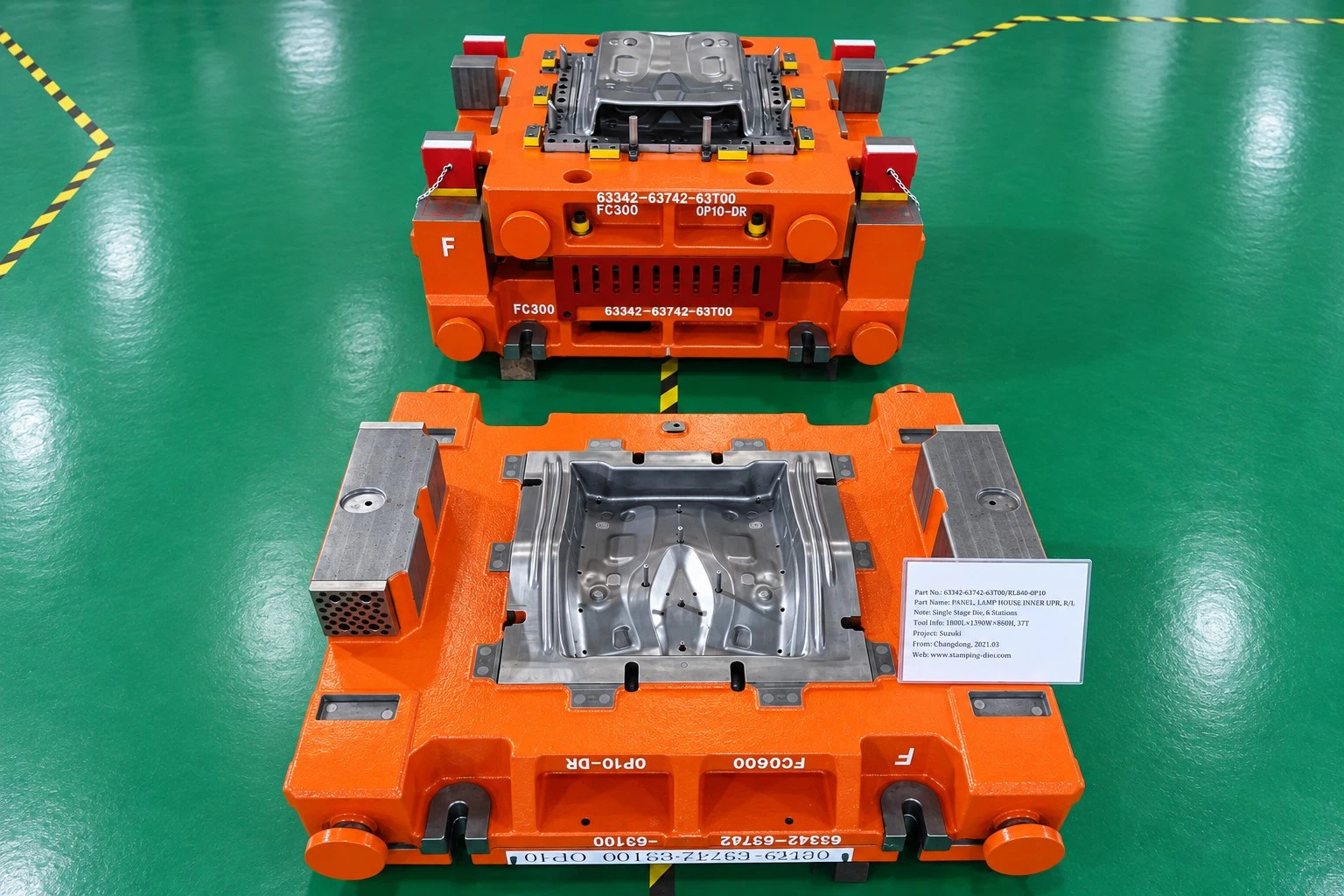
Open Die: Check the Working Area Against the Panel
The open tool gives the die makers direct access to the areas responsible for locating and changing the panel.
During fitting, contact is checked against the actual incoming sample. A support surface that is correct in CAD may need local adjustment once the free-state stamped panel is placed in the die.
The open condition also makes it easier to separate the locating problem from the forming problem. If the part is not sitting consistently before the press closes, modifying the working surface first can make the diagnosis more difficult.
With a 1300 × 1130 mm footprint and a 3.7T assembled weight, the tool remains compact compared with Changdong's larger automotive dies, but still requires controlled support and guiding across the working area.
R/L Samples Are Compared Separately During Tryout
|
Review Area |
What Is Checked |
|
Incoming Condition |
Whether RH and LH samples arrive at the die in a stable, repeatable shape. |
|
Locating |
Whether each side seats on its intended datums without being forced into position. |
|
Local Profile |
Whether the operation creates the required panel geometry after the part is released. |
|
Flange Condition |
Whether RH and LH flange locations agree with their individual drawings and downstream assembly needs. |
|
Visible Marks |
Whether support or forming contact leaves unacceptable tool marks on the panel. |
|
Outgoing Condition |
Whether the stamped panel can be located consistently by the following operation. |
3.7T Still Has to Work as a Line Tool
The 1300 × 1130 × 630 mm envelope has to match the intended press bolster, shut-height range and handling arrangement. Tandem production depends on every die being practical to install and remove as part of the line.
At approximately 3.7T, lifting positions and the way the die is supported during changeover become part of normal production use, not only shipment preparation.
The installed die condition has to leave enough operating space for the chosen line-handling method while remaining compatible with the press opening and shut-height requirements.
Completed Suzuki Single-Stage Tool
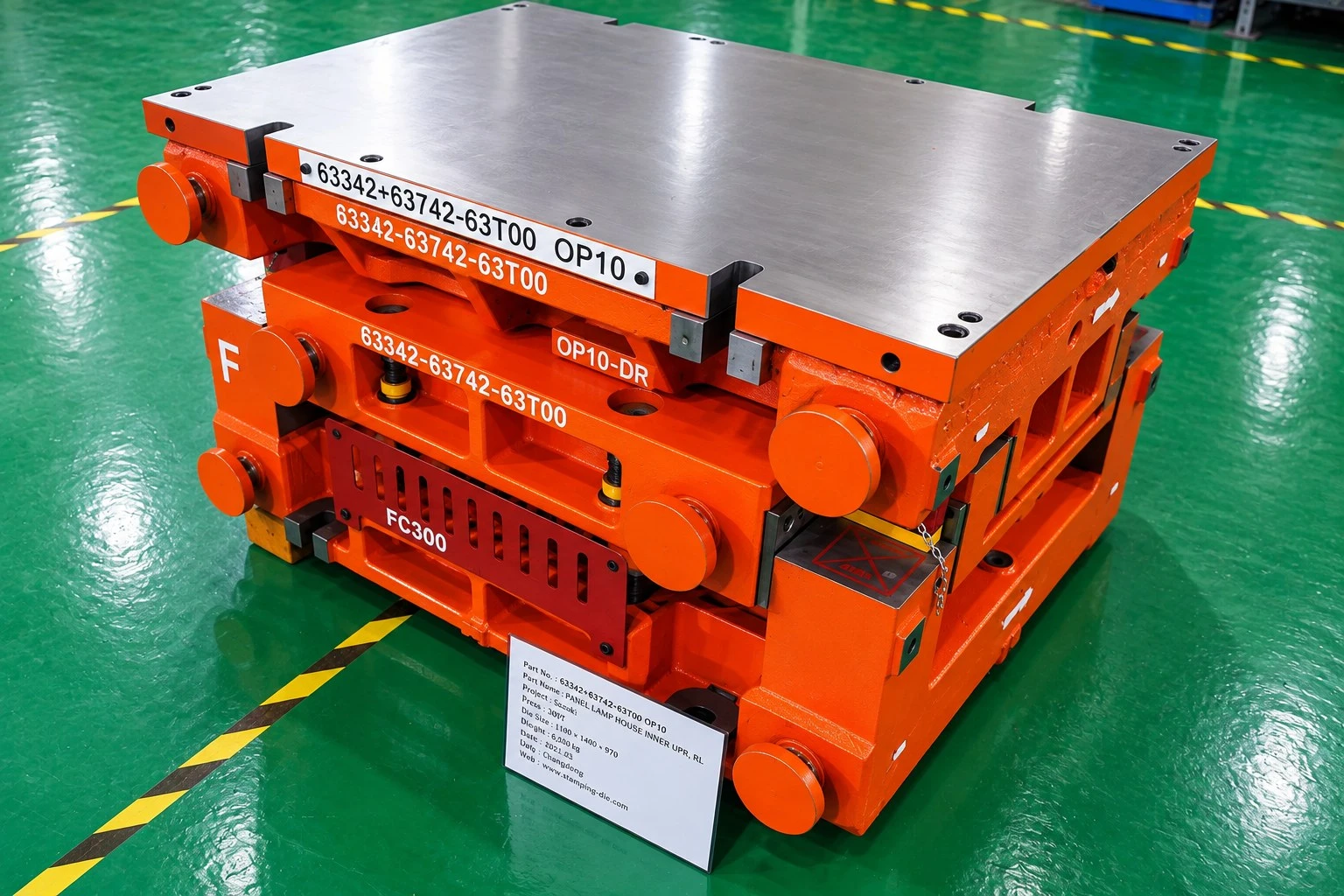
Completed single-stage die for Suzuki Panel, Lamp House Inner UPR, R/L - 1300 × 1130 × 630 mm, approximately 3.7T.
Automotive Quality-System Support
For automotive tooling work, the physical die and stamped samples remain the direct project evidence. The quality-management system provides the company-level framework behind engineering changes, manufacturing records and inspection control.
Changdong's IATF 16949 documentation is relevant to automotive programs where drawing revisions, sample records and controlled changes need to remain traceable during tool development.
For this Suzuki Tandem Die project, that formal system supports the practical requirement that RH and LH samples, tooling corrections and project revisions remain tied to the same approved data.

Hot Tags: tandem die, China tandem die manufacturers, suppliers, factory, large sheet metal tandem dies, multi station transfer dies, progressive stamping tooling, sheet metal dies, tandem line die, transfer deep drawing die


