

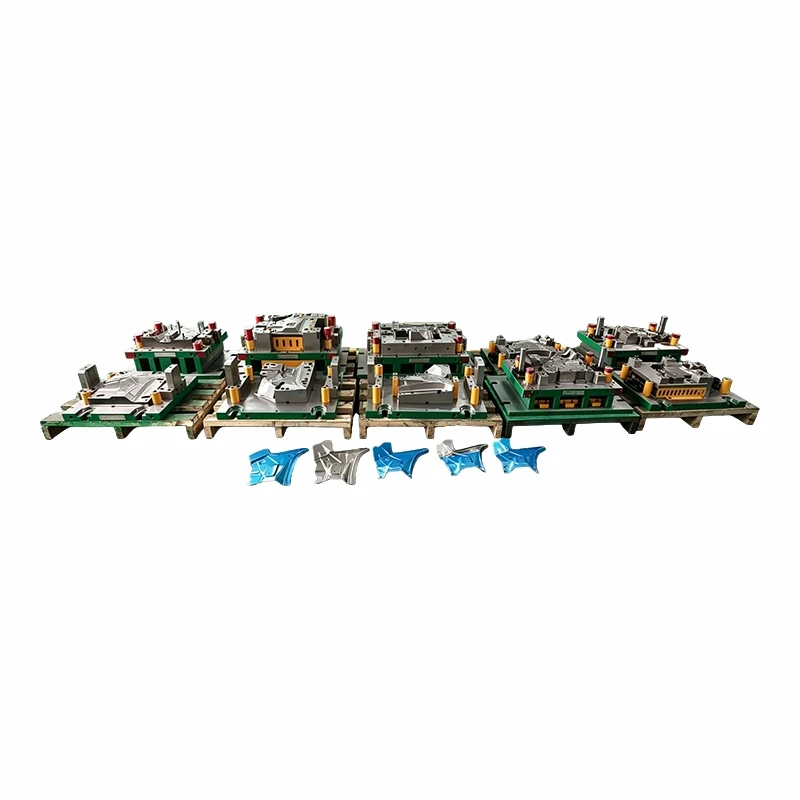
Product Parameters
|
Item |
Specification |
|
Product Name |
Tooling Mould |
|
Internal Code |
A23-3002 |
|
Project Code |
SZHA |
|
Application |
Rear Right Taillight Mounting Panel |
|
Part No. |
SZHA-6301122 |
|
Part Material |
5182 |
|
Thickness |
1.2 mm |
|
Material Specification |
W569 x P185 x T1.2 mm |
|
Material Utilization Rate |
76.9% |
A metal tooling mould for a taillight mounting panel must keep the lamp opening, mounting features, and surrounding profile in a stable relationship. Aluminum 5182 can form well, but broad surfaces and local flanges may still wrinkle, spring back, or pick up on the die. For this Tooling Mould, the sequence should establish the main surface before the final trimming line and hole position are fixed. The W569 width and P185 progression can be reviewed for carrier support and scrap balance without weakening the areas that guide the strip.
A production tooling mould for this part should use the same datums as the lamp and body assembly check. The panel may pass an isolated dimension yet create a gap if its profile or flange angle shifts. A forming tooling mould therefore needs sample checks for surface, profile, hole position, flange height, and tool marks. Contact areas should be smooth and easy to clean because aluminum pickup can change the result from one run to the next. Protective handling is also important after dropping off, particularly around visible or sealing surfaces.
The sheet metal production mould can use replaceable inserts at the trimming and piercing zones, while broader forming areas may need polished tool steel with an appropriate surface treatment. The stated 76.9% utilization is a useful reference, but any layout change must be judged against pitch stability and part quality. An industrial tooling mould also needs reliable guide components, accessible lubrication points, clear die clamping, and maintenance space around lifters and sensors. Tool weight and press interface should be confirmed before final design.
For the Tooling Mould quotation, the package should combine the 3D drawing, 2D drawing, press specification, and die technical standards. Assembly datums, surface requirements, annual volume, inspection format, and the accepted material condition will help define the forming route and tryout plan. Changdong can then review the confirmed taillight-panel requirements rather than applying a general aluminum-panel process.
Hot Tags: tooling mould, China tooling mould manufacturers, suppliers, factory


