

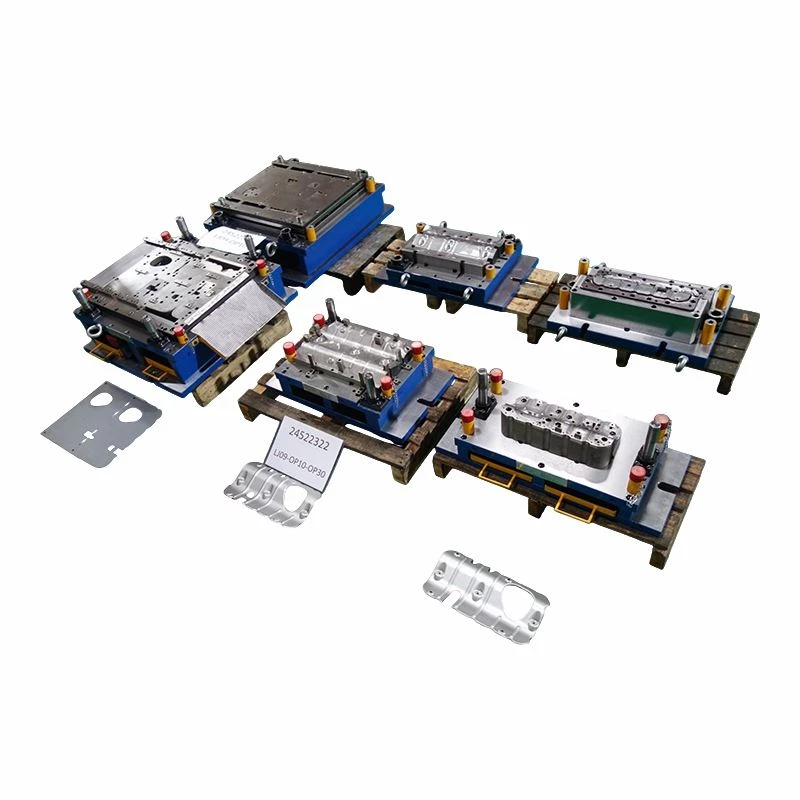
A Single Station Die should have a narrow, measurable responsibility. The tool may cut a finished blank, pierce a hole pattern, form a flange, or restrike one profile, but its datums must agree with the operations before and after it. A single station stamping die is easier to tune when the incoming condition is specified clearly. If the blank edge, pilot hole, or pre-form angle varies, the station may appear unstable even though its own working geometry is correct.
A single station press die can be supplied by hand, feeder, robot, or a simple pick-and-place unit. The chosen method affects nest access, finger clearance, sensor position, and dropping off. Manual loading needs positive orientation features that cannot be defeated by turning the part over. Single station tooling for a small part may use a compact nest, while a broad panel needs support close to the working area so it does not rock during the stroke.
When the operation is a bend or local form, a single station forming die must account for material direction, springback, and surface sensitivity. Replaceable inserts are useful where bend radii or trim edges are likely to change after tryout. Pressure pads should hold the part without printing tool marks into a visible surface. Adjustment points are kept accessible, and the die clamping layout should allow repeatable setup without blocking gauges or scrap chutes. For repeat runs, setup blocks or recorded shut-height values reduce variation between operators. A simple check sheet can confirm nest condition, stop position, lubrication, and part orientation before production begins.
Review the press specification first, then check the die technical standards against the 3D drawing and dimensioned 2D drawing. Annual demand, feeding preference, and the required sample report help determine the appropriate level of automation and spare parts for the Single Station Die.
Hot Tags: single station die, China single station die manufacturers, suppliers, factory


