

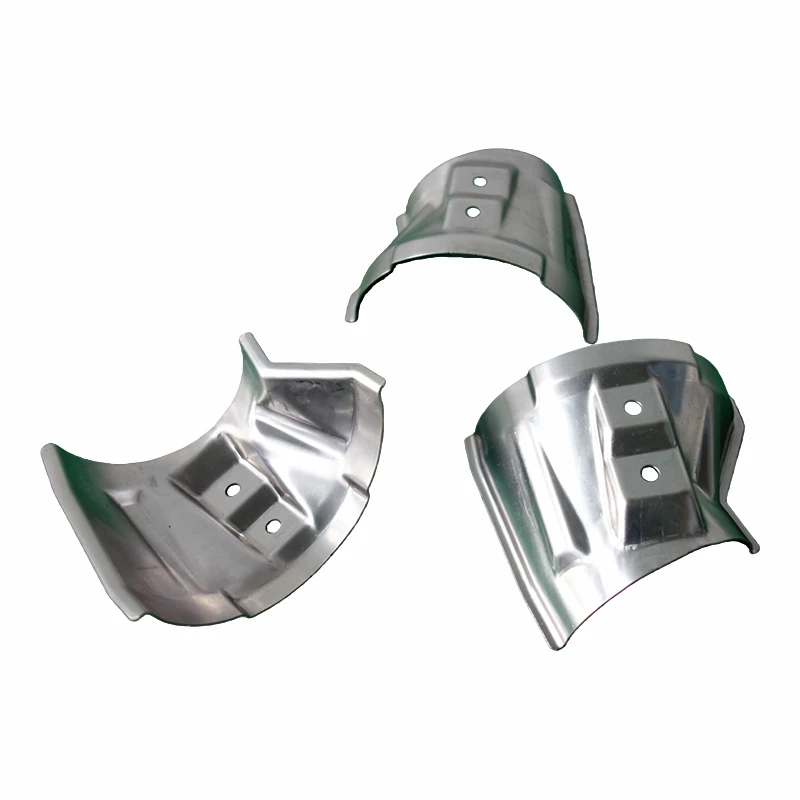
A pressed sheet metal part with a simple blank and one bend may be economical in a single-stage die, especially for modest quantities. A more complex component with repeated production demand may justify progressive tooling, while larger drawn parts often need transfer or tandem operations. The route should be selected after reviewing feature sequence, handling between stations, scrap direction, and inspection access. Building extra stations does not automatically improve quality; each operation should have a clear purpose and a way to verify the result.
A formed sheet metal part needs a stable datum scheme from blank development through final inspection. The 2D drawing should identify critical hole position, profile, trimming line, bend angle, surface zones, burr direction, and any tool-mark restrictions. The 3D drawing supports die-face development, but it does not replace tolerances or technical notes. For a precision sheet metal part, material grade and thickness range should be released with the die technical standards and press specification so clearance, radii, force, and springback can be assessed on the correct basis.
An industrial sheet metal part should be approved from samples made under a stable process. Typical checks include dimensions, flatness, profile, flange angle, burr height, surface condition, and assembly fit. The buyer should also provide annual quantity, joining method, coating or plating requirements, packing expectations, and the required inspection report. Changdong can then review tooling feasibility, CAE simulation needs, die construction, tryout scope, and sample confirmation without adding unsupported assumptions to the quotation.
The final handover should include the approved sample, setup sheet, maintenance points, spare-part list, and inspection method. Revision control matters: production, tooling, and quality teams should all work from the same drawing issue and record any later correction by operation.
FAQ
Hot Tags: sheet metal part, China sheet metal part manufacturers, suppliers, factory


