

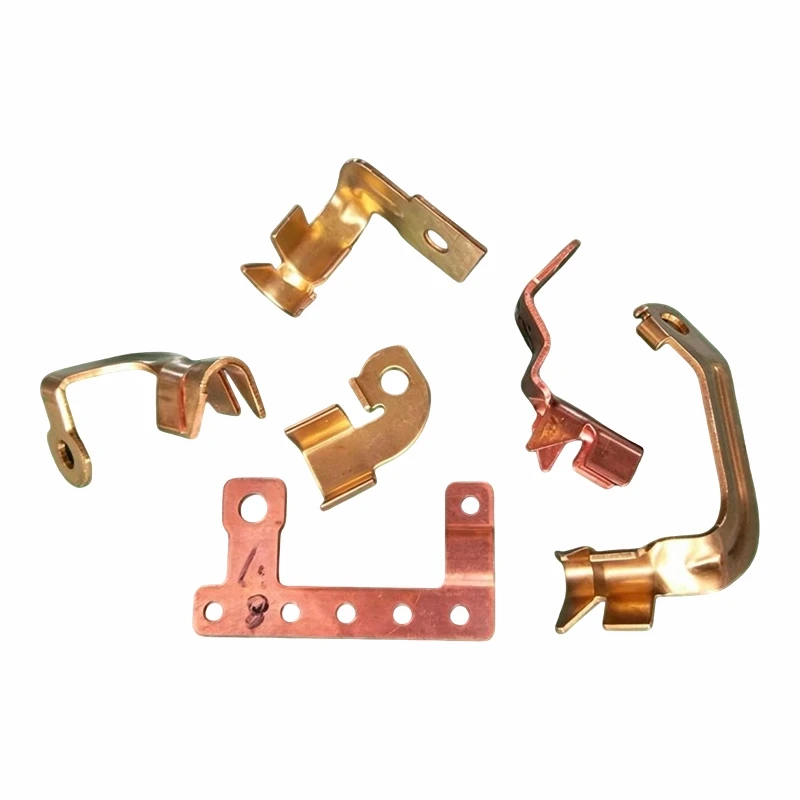
Progressive Metal Stamping
This product is an automotive cable terminal made from 1.5 mm C1100 copper. Progressive Metal Stamping is used as the production method for repeat-volume supply.
The page title describes the manufacturing process, but the product supplied by Changdong is the finished copper terminal. For this type of project, we work from the customer drawing, copper specification and required annual quantity, then develop the tooling and production route around the actual part.
C1100 copper also makes material usage commercially relevant. Strip width and pitch affect the amount of copper purchased over the life of the program, so utilization is considered during layout work without reducing the carrier to a condition that is difficult to run reliably.
Product Parameters
|
Item |
Specification |
|
Product Name |
Progressive Metal Stamping |
|
Application |
Automotive Cable Terminal |
|
Part Material |
C1100 Copper |
|
Thickness |
1.5 mm |
|
Production Method |
Progressive Stamping |
|
Project Type |
Custom Automotive Stamped Part |
|
Changdong Support |
Tooling Development / Trial / Sample Inspection / Production |
About This Automotive Cable Terminal
The material on this project is C1100 copper at 1.5 mm thickness. Compared with very thin electronic contacts, the finished section is heavier and the amount of copper removed around every part is more noticeable in the production cost.
When Changdong reviews the strip layout, material utilization is one of the items discussed by the design team. A tighter layout can reduce copper consumption, but there still has to be enough material left to carry the terminal through the remaining operations.
We do not publish a standard material-utilization percentage because it depends on the actual terminal outline. Two terminals made from the same 1.5 mm C1100 material may have completely different nesting possibilities.
The finished terminal is checked from the customer drawing. Where the part contains fastening holes, mating surfaces, formed sections or other controlled features, those areas remain the reference during sample adjustment.
Copper surfaces also show tooling contact easily. We distinguish between a drawing-controlled area and an ordinary hidden surface rather than treating every small witness mark as the same problem.
If plating is part of the customer specification, we also need to know where it occurs in the process. A pre-plated strip enters the stamping tool with its finish already present. A bare copper terminal that will be plated afterward reaches the finishing supplier in another condition.
Why Choose Changdong
The same company works on the tool and the stamped terminal. Changdong develops stamping tooling and can continue into stamped-part production. When a trial terminal needs correction, the issue can go back to the engineers and toolmakers who are working on the actual die.
Our design department has 13 die design engineers. CATIA, VISI, AutoForm and Dynaform are available within the engineering team. The software route is selected according to the project rather than using the same workflow for every stamping part.
Tool components are manufactured in our Dongguan operation. Our equipment includes CNC, EDM, grinding, drilling and six WEDM machines. WEDM is especially useful where terminal tooling contains punches or inserts with controlled cutting profiles.
Tryout is not separated from toolmaking. Changdong has press capacity from 45T to 800T, with feeders available for relevant tooling trials. A terminal project is matched to the appropriate press instead of using the largest press simply as a marketing figure.
Automotive project control is already part of our business. Changdong operates under IATF 16949 and ISO 9001. For an automotive cable-terminal project, drawing revision, material specification and approved sample condition can remain connected to the same controlled project.
Changdong was founded in 2012. Our Dongguan facility is approximately 4,000 square meters and has around 80 employees across engineering, machining, toolmaking, tryout and production.
What Can Be Included in the Project
|
Project Stage |
Changdong Support |
|
Drawing Review |
Part geometry, material condition, production quantity and customer technical requirements |
|
Tool Development |
Strip layout, die design, machining, WEDM, EDM, grinding, assembly and die clamping |
|
Trial |
Trial strip, loose terminal samples and correction of drawing-controlled features |
|
Sample Inspection |
Dimensions and part conditions specified by the released customer drawing |
|
Production |
Stamped terminal supply after the approved project condition is established |
|
Later Tool Service |
Review of punches, inserts and other tooling areas when production condition changes |
Not every customer needs all of these stages from one supplier. Changdong can review the actual project scope before quotation.
For customers who need both tooling and stamped parts, keeping the two together gives us a practical advantage when a later production issue has to be traced back into the tool.
Frequently Asked Questions
Do you only manufacture the stamping die?
No. For this page, the product is the automotive cable terminal. Changdong can manufacture the production tooling and can also continue with stamped-part production after the samples reach the agreed condition.
Can you stamp 1.5 mm C1100 copper?
This project reference is based on 1.5 mm C1100 copper. For a new part, we still need the customer's material specification, temper and thickness tolerance because the alloy designation alone does not define every production condition.
Can you help reduce copper usage?
Strip utilization is reviewed during layout development. Our engineers can study part orientation, strip width and pitch, but any material-saving change still has to leave enough carrier strength for stable production.
Can Changdong work with plated copper terminals?
Yes, plating requirements can be included in the project review. We need to know whether the incoming strip is already plated or whether the finished terminal will be plated after stamping, as the two routes create different surface-handling conditions.
What information should we provide for quotation?
A controlled 2D drawing is the best starting point. 3D data, C1100 material condition, annual demand, plating information and any automotive technical requirements are also useful.
Can you work to an automotive quality system?
Changdong operates under IATF 16949 and ISO 9001. Project requirements such as drawing revision, sample approval and customer-defined inspection items can be handled within the corresponding project controls.
Do we have to use progressive stamping for every terminal?
No. Progressive Metal Stamping is the manufacturing method used for this product reference. A new terminal is reviewed from its geometry, quantity and technical requirements before the production method is finalized.
Send Us Your Automotive Terminal Drawing
If you are sourcing a C1100 copper cable terminal or another custom automotive stamped component, send Changdong the drawing and expected production quantity.
We can review the part, material and required manufacturing scope before quotation. Where tooling and production are both required, the same project can continue from tool development into stamped-part supply.
Hot Tags: progressive metal stamping, China progressive metal stamping manufacturers, suppliers, factory, custom deep drawing parts, custom sheet metal formed parts, custom stamped electrical components, metal pressed parts, metal stamping brackets, progressive stamped parts


