

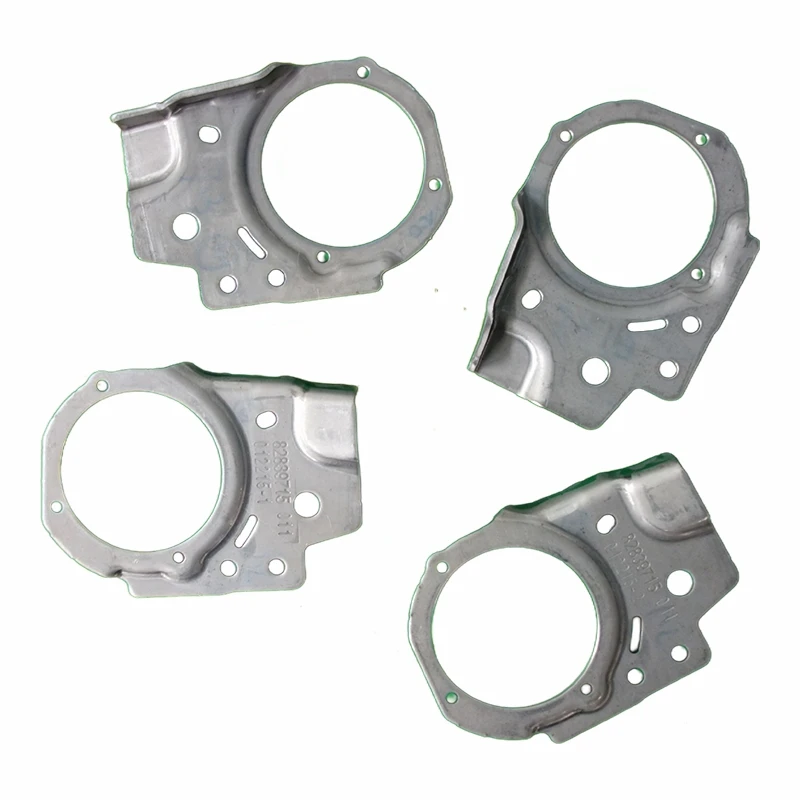
Product Parameters
|
Item |
Specification |
|
Product Name |
Stamped Component |
|
Application |
Automotive Seat Component |
|
Part Material |
S355MC |
|
Thickness |
3.0 mm |
A pressed stamped component at this thickness needs sufficient blank support and a clear load path through the die. The forming sequence should establish stable locating features before the highest-load bends or draws are completed. If a flange pulls material from around a mounting hole, piercing may be moved later in the route or followed by restrike. CAE simulation can help identify likely thinning and springback, but tryout measurements still decide the final compensation. Lubrication and edge condition should be agreed for the actual production material.
A formed stamped component for a seat system should be checked in relation to mating rails, brackets, or weld fixtures. Hole position, profile, flange angle, flatness, and the trimming line all influence assembly. An industrial stamped component may meet individual drawing dimensions yet still load the fixture if datums are applied differently at inspection and welding. Trial parts should therefore be measured from the released datum scheme and, where possible, checked in an assembly gauge. Tool marks in contact or weld areas should be recorded rather than accepted informally.
Compared with a thin metal stamped component, the 3.0 mm S355MC part places higher demand on punch support, die guidance, press energy, and die clamping. Replaceable inserts can shorten maintenance around cut edges and heavily loaded forms. For feasibility review, provide the 2D drawing, 3D drawing, die technical standards, press specification, annual demand, joining method, and required inspection reports. These inputs allow a realistic decision between progressive, transfer, or staged single-operation tooling.
High-strength sheet can vary between coils even when the nominal grade is unchanged. Incoming certificates, thickness checks, and a retained master sample help production respond to that variation. The control plan should identify which dimensions are checked at setup, which are monitored by fixture, and which require periodic full measurement during the run.
Seat Component Tooling Qualifications
A stamped component for an automotive seat structure should be supported by automotive quality documentation and relevant technical patents. Changdong can display IATF 16949, High-Tech Enterprise certification, and a patent for an automotive seat component mold integrating multiple production steps. This selection matches the application because 3.0 mm S355MC seat parts require controlled forming sequence, springback review, hole alignment, and assembly-gauge validation. IATF 16949 helps support automotive process control and traceability, while the high-tech certificate and seat-related patent show development capability for structural tooling. For customers reviewing seat-frame or seat-bracket stamped components, these documents provide stronger evidence than general company claims because they connect certification, engineering capability, and product application.


Hot Tags: stamped component, China stamped component manufacturers, suppliers, factory


