

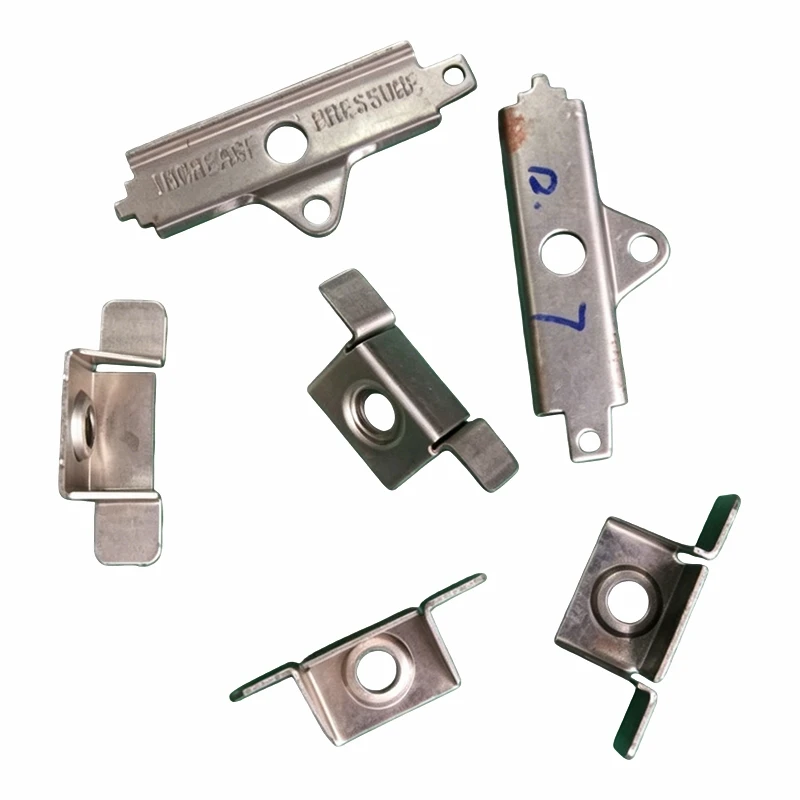
Product Parameters
|
Item |
Specification |
|
Product Name |
Hardware Stamping |
|
Application |
Small Hardware Stamped Part |
|
Part Material |
SPCC |
|
Thickness |
0.8 mm |
Hardware Stamping should begin with a clear split between features that need one-hit accuracy and features that can be formed in sequence. Hardware stamped components with only piercing and one bend may be economical in a single-stage tool, while metal hardware stampings with several holes, tabs, and cut-offs often justify a progressive layout. The decision should consider operator handling, press availability, strip utilization, and the number of parts required per month. Tooling that is too complex for the demand can cost more to maintain than it saves in cycle time.
For hardware press parts, the drawing should identify functional holes, datum edges, mating surfaces, and any areas that will be plated or painted. Punch clearance influences burr height and slug control; bend radii and grain direction influence cracking and springback. Hardware Stamping also needs a reliable dropping-off path because small pieces can bridge across a chute or return with the strip. Embossed sheet material can provide a smooth chute surface, and a pneumatic cylinder-driven vibrator may be added when scrap shape makes evacuation unreliable.
After tryout, the handover package should show setup dimensions, lubrication points, sensor checks, sharpening limits, and the accepted sample. Small parts are easy to mix, so containers and labels should identify part number, revision, material lot, and inspection status. A short control plan for first-off checks is usually more useful to production staff than a long general instruction sheet. The setup sheet should also state accepted press speed and who signs off restart after maintenance.
FAQ
Hot Tags: hardware stamping, China hardware stamping manufacturers, suppliers, factory


