

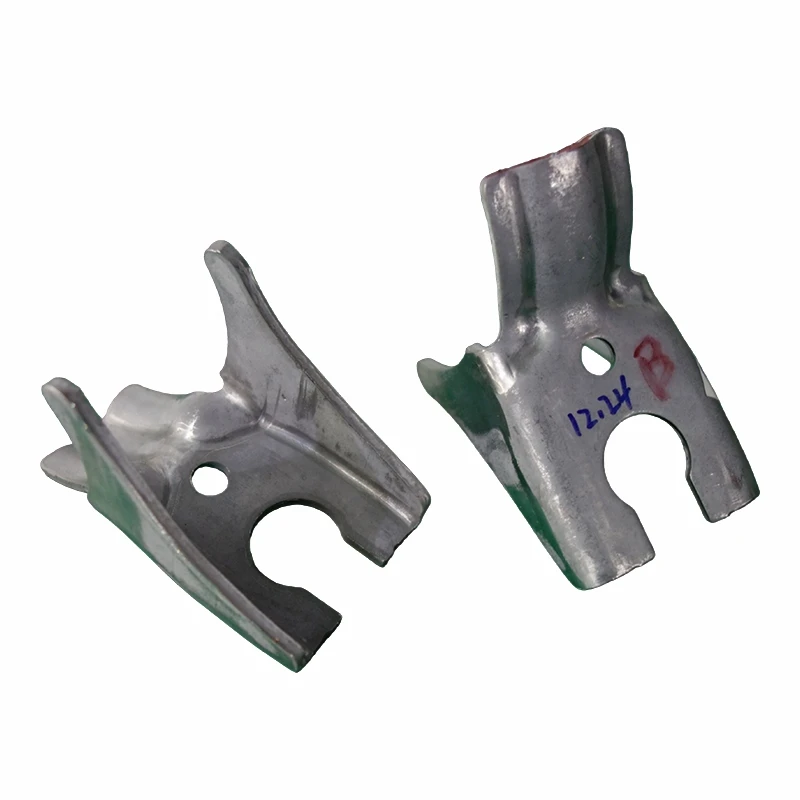
Pressed Part
This Pressed Part is a custom automotive seat component made from 3.2 mm JAH440 steel.
Changdong manufactures the part to the customer's released product data. For a structural seat component, that distinction is important. We control the stamped condition defined on the drawing; we do not invent the seat load, crash requirement, weld specification or final vehicle acceptance criteria when those items have not been supplied by the customer.
Keeping that boundary clear makes the project easier to manage. The drawing tells us what the stamped part must be. The customer's seat-system validation tells the customer whether that part performs correctly inside the complete assembly.
Product Parameters
|
Item |
Specification |
|
Product Name |
Pressed Part |
|
Application |
Automotive Seat Component |
|
Part Material |
JAH440 |
|
Thickness |
3.2 mm |
|
Manufacturing Basis |
Released Customer Drawing and Approved Material Requirement |
|
Part-Level Control |
Drawing Dimensions / Profile / Holes / Trim / Edge and Surface Requirements Where Specified |
|
Project Type |
Custom Automotive Stamped Component |
What Belongs to the Stamped Part - and What Does Not
|
Changdong Manufactures Against |
Customer / Seat-System Definition |
|
Released part geometry |
Required structural function inside the complete seat |
|
Specified JAH440 material condition |
Vehicle or seat-system load requirement |
|
Drawing tolerances and datums |
Crash or durability acceptance criteria |
|
Drawing-controlled hole, profile and trimming conditions |
Final mating-part design and assembly strategy |
|
Specified burr, surface or tool-mark limits |
Welding parameters unless included in the supplied project specification |
|
Approved stamped sample condition |
Complete seat-system functional validation |
This distinction prevents two common problems.
The first is over-assuming. A seat component may contain a broad flange, but Changdong should not automatically call it a weld flange unless the customer data shows that function. A hole may be important, but we should not decide by ourselves whether it is a locating hole, fastening hole or simple clearance opening.
The second problem is the opposite: ignoring supplied functional information because it is not written as a dimensional tolerance.
If the customer identifies one area as an assembly interface, weld area or other controlled zone, that information belongs in our manufacturing review. It gives the physical feature context without requiring Changdong to redesign the customer's seat structure.
A Passing Dimensional Report Does Not Replace Seat Validation
Changdong can measure the stamped component against its released drawing.
That tells us whether the manufactured part meets the characteristics assigned to the stamping supplier.
It does not by itself prove the performance of the complete seat.
A structural seat assembly can contain several stamped pieces, rails, fasteners, welds and other components. The final load path belongs to that system, not to one isolated steel part sitting on an inspection table.
For this reason, we keep product-level approval and system-level validation separate.
If the customer's engineering team requires parts for assembly trials, welding trials, fatigue work or another validation program, Changdong can manufacture samples to the agreed stamped condition. The result of those downstream tests remains part of the customer's program unless a different project scope has been formally agreed.
This makes engineering changes clearer too.
If the customer later changes a hole, flange, relief or another feature because of system testing, the new requirement comes back to us as a controlled part revision. We then manufacture against that revision rather than attempting to infer the design change ourselves.
3.2 mm JAH440 Needs a Clear Drawing, Not More Assumptions
The material reference for this component is JAH440 at 3.2 mm.
That is enough information to describe the product on this page. For manufacturing release, Changdong still needs the actual customer material standard and the applicable thickness requirement.
We do not substitute another steel merely because it has a similar nominal strength designation.
The same discipline applies to tolerances.
A thicker automotive component can carry many dimensions, but Changdong does not decide independently which ones should be tightened. If a customer wants one mounting relationship controlled more closely than another, that requirement needs to live in the released data.
This is particularly useful when several suppliers are involved in the same seat program.
One controlled drawing gives the stamping supplier, fixture supplier and assembly plant the same nominal part definition. Informal instructions passed separately to different suppliers are much harder to keep aligned.
How We Handle Information That Is Important but Not Dimensional
Not every useful manufacturing requirement is a dimension.
A customer may identify a no-mark area. Another project may define burr direction. There may be a surface that has to remain suitable for later welding or coating. A particular edge may need special attention because it remains exposed during assembly.
Changdong can work with those requirements when they are included in the controlled project documents.
We prefer a marked drawing, technical standard or written acceptance requirement over verbal instructions that exist only in one email chain.
The reason is practical.
During toolmaking, tryout and later production, more than one person may work with the same component. The requirement should remain available when the original conversation is no longer open on someone's screen.
This is also why terms such as "good surface" or "high precision" are not very helpful by themselves. They express intent, but they do not tell the manufacturing team what condition is actually being approved.
When the Customer Changes the Part
Automotive programs rarely stay completely untouched from early development through the full life of the product.
A revision may come from assembly feedback, system testing, packaging, another component change or a cost-reduction activity on the customer's side.
Changdong does not need to know every internal reason before implementing an approved part change.
We do need the new controlled data.
When a revision arrives, the useful question for us is what changed on the stamped component and what that change affects in the existing manufacturing process.
A moved hole may be local. A revised formed region may affect several surrounding operations. A change that looks small on the drawing can still require more tooling work than a visually larger change somewhere else.
We therefore review the revision against the physical manufacturing condition before confirming the implementation work.
The previous version remains identifiable instead of simply being overwritten without a record of what the tooling was originally built to make.
What Changdong Adds to the Product Program
Changdong's role is manufacturing.
We can take the released seat-component data, develop the stamping tooling, make the physical tool, run the initial samples and continue into part production where that scope is required.
Because tooling and stamped-part work are both handled within our Dongguan operation, manufacturing feedback can remain with the same project.
That does not change the ownership of the product definition.
The customer's engineering team controls the seat design. Changdong controls how the approved Pressed Part is manufactured within the agreed scope.
This boundary is useful rather than restrictive. It keeps product engineering changes with the people responsible for the seat system and manufacturing corrections with the people responsible for producing the stamped component.
Information That Should Stay With the Part Number
|
Document / Requirement |
Purpose |
|
Controlled 2D Drawing |
Defines the stamped component and its required characteristics. |
|
3D Data |
Provides the full formed geometry for manufacturing review where available. |
|
JAH440 Material Standard |
Defines the approved production material rather than relying only on a short material name. |
|
Customer Technical Standard |
Carries requirements that may not be repeated individually on the part drawing. |
|
Current Revision |
Keeps quotation, tooling, inspection and production on the same released condition. |
|
Special Surface / Edge Notes |
Identifies non-dimensional conditions that still affect acceptance. |
A Clear Product Definition Makes Manufacturing Simpler
For a new inquiry, Changdong needs the released part information rather than a long generic specification package.
The controlled drawing, 3D data where available, JAH440 requirement and expected volume give us the basis for manufacturing review.
If the seat program has additional customer standards, controlled surfaces, special edge requirements or assembly-related notes, those should stay with the same project data.
From there, Changdong can quote and manufacture the component without inventing product requirements that belong to the customer's seat design.
For this Pressed Part, that is the central requirement: make the 3.2 mm JAH440 seat component to the approved product definition, keep manufacturing responsibility clear, and let the finished part move into the customer's wider seat-system validation with no ambiguity about what the stamping supplier was required to deliver.
Hot Tags: pressed part, China pressed part manufacturers, suppliers, factory, aluminum stamped components, metal stamping brackets, precision blanked parts, progressive stamped parts, stainless steel stamped components, steel stamped components


