

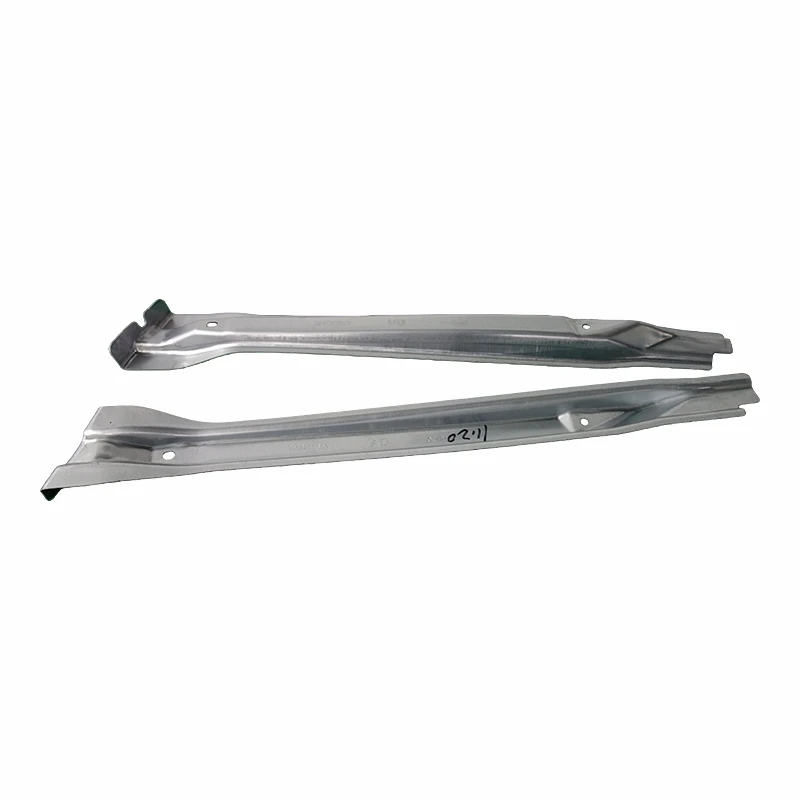
Product Parameters
|
Item |
Specification |
|
Product Name |
Pressed Component |
|
Application |
Automotive Deep-Drawn Part |
|
Part Material |
P260D+Z |
|
Thickness |
1.15 mm |
A precision pressed component starts with the correct blank shape and draw direction. Binder pressure, draw beads, radii, and lubrication control how material enters the die. The zinc-coated surface can mark or gall if pressure is concentrated, so contact areas should be polished and inspected during tryout. CAE simulation is useful for locating likely thinning, wrinkling, or springback, but the model should use the released material data. Changes to blank size or addendum should be recorded because they affect both formability and material utilization.
A formed pressed component may require draw, restrike, trim, pierce, and flange operations in a transfer or tandem sequence. Trimming too early can remove material needed to stabilize a later flange. Piercing before major springback is corrected can move the final hole position. For an industrial pressed component, inspection should follow the final datum scheme and include surface, profile, trimming line, flange angle, hole position, and tool marks. Assembly checking is recommended when adjacent panels or brackets control the actual fit.
The pressed metal component should be reviewed from the 2D drawing, 3D drawing, die technical standards, press specification, annual quantity, coating limits, and joining requirements. Trial samples should come from a stable press setup with the intended lubricant and transfer method. A change log should identify draw corrections, restrike adjustments, and any insert replacements so the approved condition can be reproduced during maintenance.
The coated surface should be protected from sliding contact wherever possible. Transfer fingers, nests, and chutes need radii and contact areas that do not scratch the draw wall. If parts are stacked after the last operation, separators may be needed to prevent flange-to-surface rubbing. The sample report should distinguish forming marks that are functional from surface damage that is not acceptable. Inspection frequency should increase during early production until coating behavior and springback are stable.
Hot Tags: pressed component, China pressed component manufacturers, suppliers, factory


